On this page
For a fall trip to Beijing, I’d start with Ditan’s ginkgo trees and the old streets around Guozijian, then give the Summer Palace a day of its own. If you want autumn to be part of the hotel stay, put Fragrant Hill Hotel on your shortlist. For a first visit with plenty of city sightseeing, choose a central base and go out for the leaves.
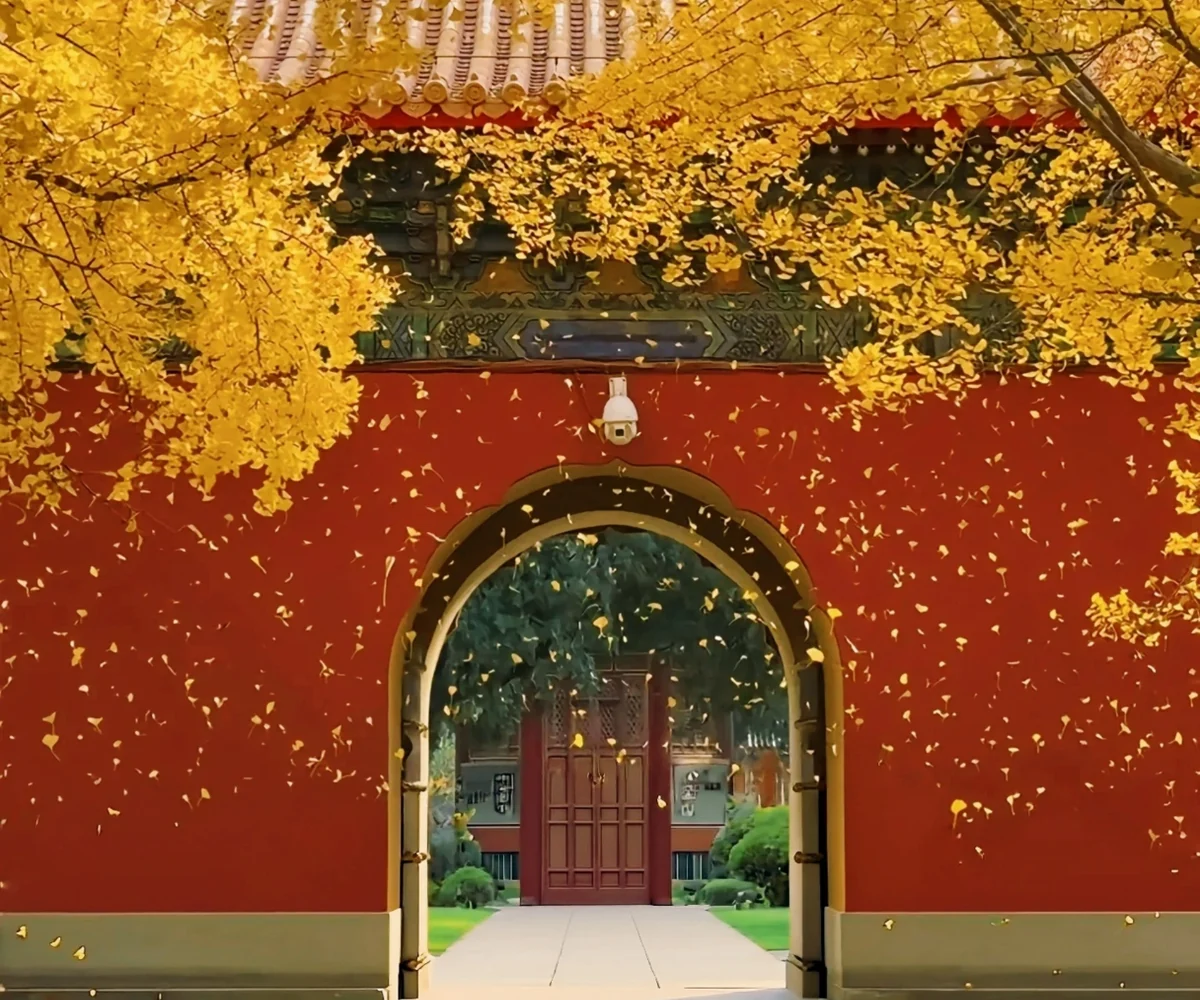
The appeal is in the combination: yellow branches against a red wall, a tiled roof beyond them, fallen leaves caught along the edge of a lane. You can find beautiful foliage elsewhere. This is the Beijing part.
Where I’d stay for an autumn trip
My shortlist: Fragrant Hill Hotel for a garden escape; Park Plaza Wangfujing for a city-focused trip; Regent Beijing if you want to make more of the hotel stay. Only the first is a foliage destination in its own right. The other two make sense when you want to explore different parts of Beijing without moving hotels.
Fragrant Hill Hotel: make the garden part of the trip
This is the hotel I’d look at first for a stay built around autumn. Fragrant Hill Hotel is inside Fragrant Hills Park, in a garden setting designed by I. M. Pei. Fragrant Hill Hotel's courtyard has ginkgo trees, and its autumn offering includes garden-view accommodation.
That gives it a reason to be on this list beyond a convenient address. Spend the morning on the hill, come back for lunch, and keep the afternoon for the courtyard rather than heading straight back across Beijing. For someone who likes gardens and architecture as much as a big viewpoint, that sounds like a much better use of an overnight stay.
I’d consider a night here alongside a central-city stay. I wouldn’t make it the base for a trip mostly spent around the Forbidden City and the eastern hutongs; the two stays serve different plans.
Ask specifically about the garden-facing room category and the current autumn package. The room shown in a seasonal promotion may be different from the room attached to the lowest rate. Confirm park access arrangements with the hotel, too.
A city base: Park Plaza Wangfujing or Regent Beijing
For a first Beijing visit, Park Plaza Beijing Wangfujing — 北京丽亭酒店 would be my practical starting point. Park Plaza Beijing Wangfujing is a central-city base rather than a countryside retreat. It belongs on the shortlist for a trip where the walks, parks, and meals matter more than spending a large part of the day at the hotel. Look at the rooms on its official property page, then compare the rate for the room you actually want.
Regent Beijing — 北京丽晶酒店 is the alternative I’d compare if the hotel itself has a bigger place in the holiday. Its official site places the property on Jinbao Street in Wangfujing and identifies Dengshikou on subway Line 5 as a metro connection. Regent Beijing lists an indoor pool and Serenity Spa. If you picture coming back for a swim after a long walk, that is a concrete reason to compare it with Park Plaza. Start with Regent’s official room and location information and decide whether the room and facilities justify the difference in your dates’ rates.
For these two, you’re choosing a base for going out to see autumn. If the dream is a courtyard full of ginkgo at the hotel, go back to Fragrant Hill Hotel and investigate the actual room view.
The walk I’d put first: Ditan to Guozijian
Ditan Park → the Yonghe Temple area → Guozijian Street → Wudaoying Hutong. This is the outing I’d keep if there were only room for one autumn walk. It brings together the trees, old buildings, and neighborhood streets without a string of cross-city journeys.
Start at Ditan Park — 地坛公园. The long ginkgo avenue is the obvious draw when it turns gold, but don’t spend the whole visit trying to photograph an empty path. A wall under a canopy, a tree leaning over a roof, a patch of leaves with the light coming through: those smaller views can be more satisfying than the crowd-filled shot everyone is waiting for.
Continue toward Yonghe Temple — 雍和宫, the Lama Temple. If going inside matters to you, make it a proper visit. If the point of the day is to be outdoors, take in the surrounding streets and carry on to Guozijian — 国子监. There is no need to turn every doorway into another obligation.
Around the Confucius Temple and the old Imperial College, slow down. Look at the rooflines, gates, and old trees; choose an interior visit if the architecture interests you. Then finish around Wudaoying with something to eat or a café stop.
I’d leave the Drum Tower and Shichahai for another outing. They’re tempting additions on a map, but this walk already has a good ending. You should still have the energy to enjoy sitting down.
Palace roofs or a whole afternoon by the lake?
Choose Jingshan and Beihai for an old-city day, or the Summer Palace for a longer garden outing. Resist trying to do both versions in one day.
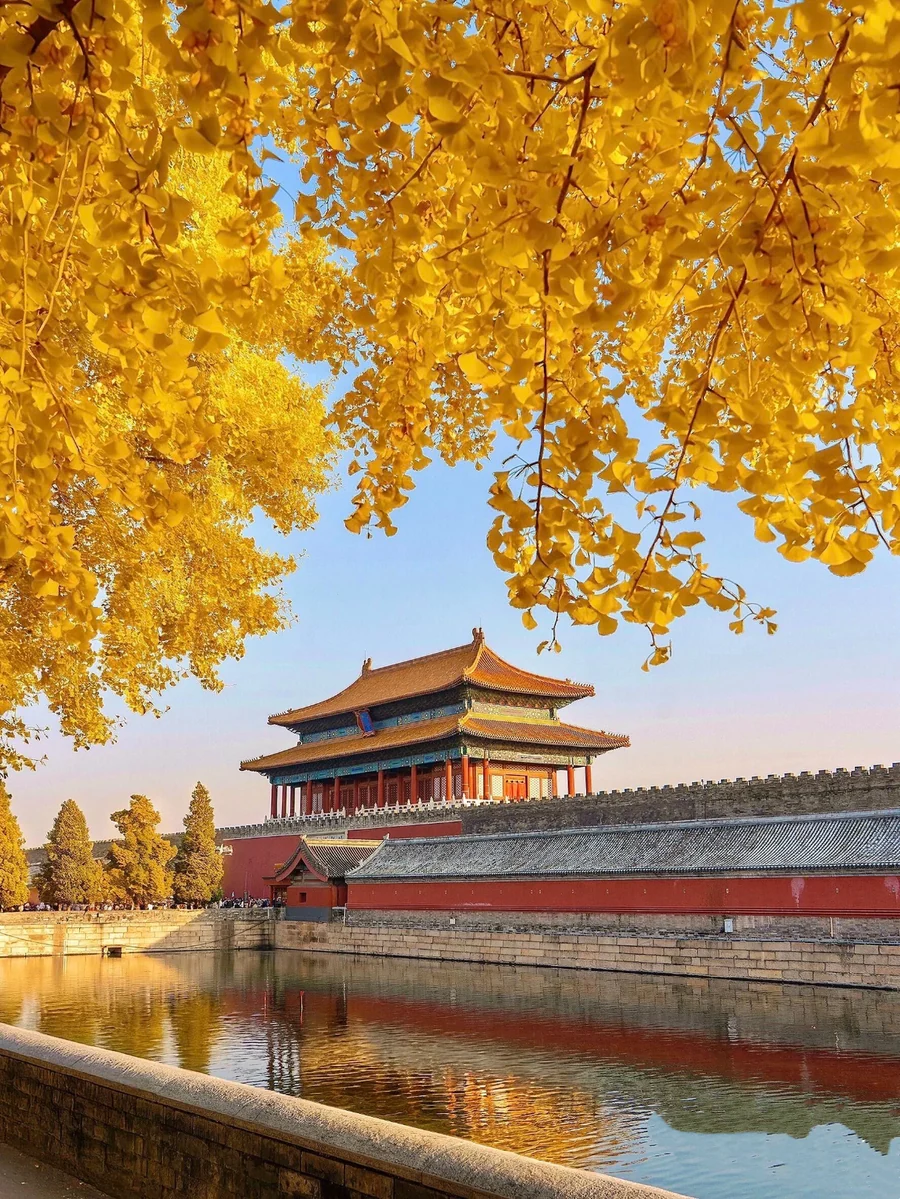
Jingshan gives you the view across the Forbidden City’s roofs. That change of perspective is the reason to climb: after walking beside palace walls, you can finally see how the buildings fit together. Follow it with Beihai if you still feel like a lakeside stroll. After a full Palace Museum visit, Jingshan alone may be plenty.
For a street walk leading toward Jingshan, consider the area around Wusi Street — 五四大街 and the Peking University Red Building — 北大红楼. The combination of old façades and yellowing trees is the attraction; museum interiors are a separate booking decision. A walk outside the Palace Museum also doesn’t replace a museum reservation.
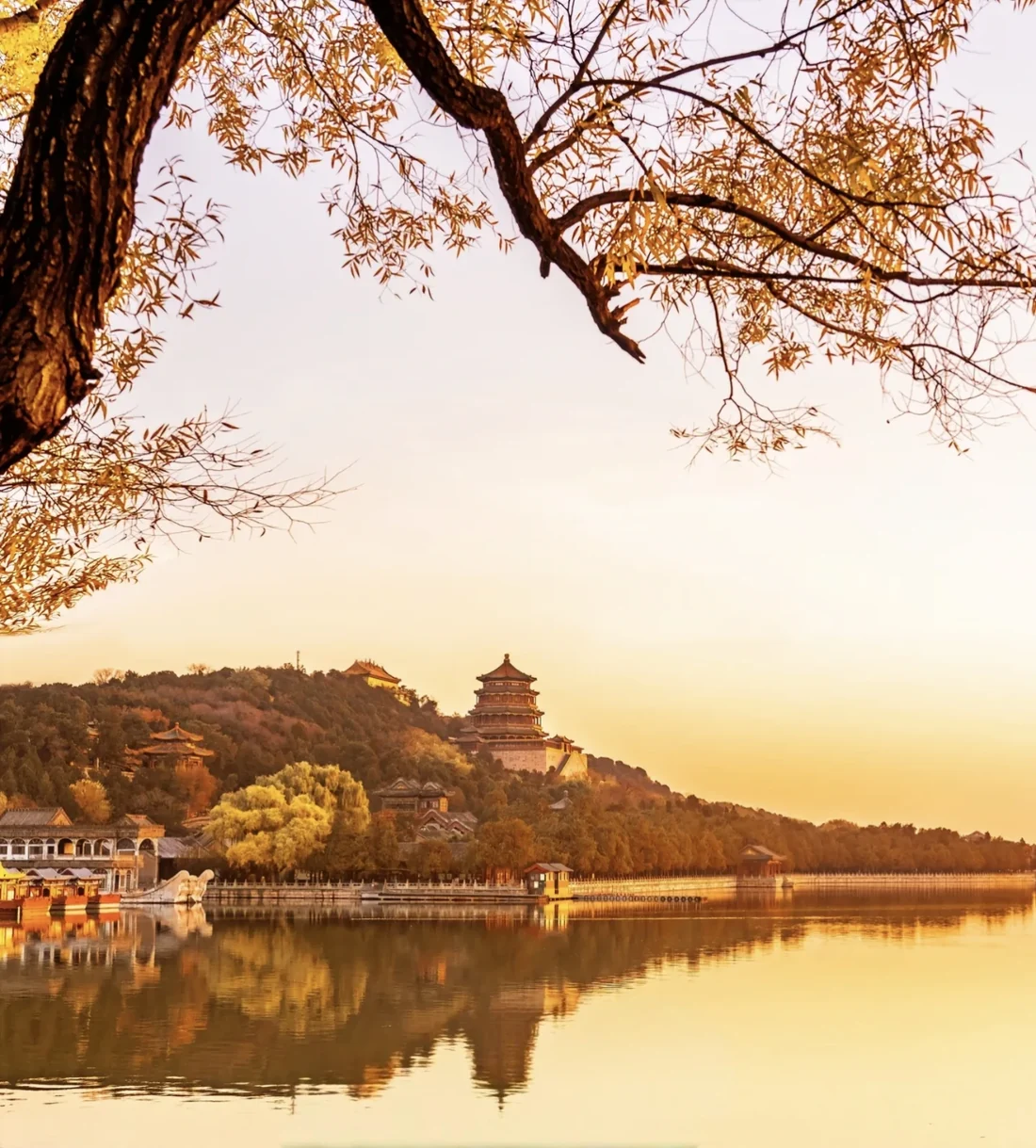
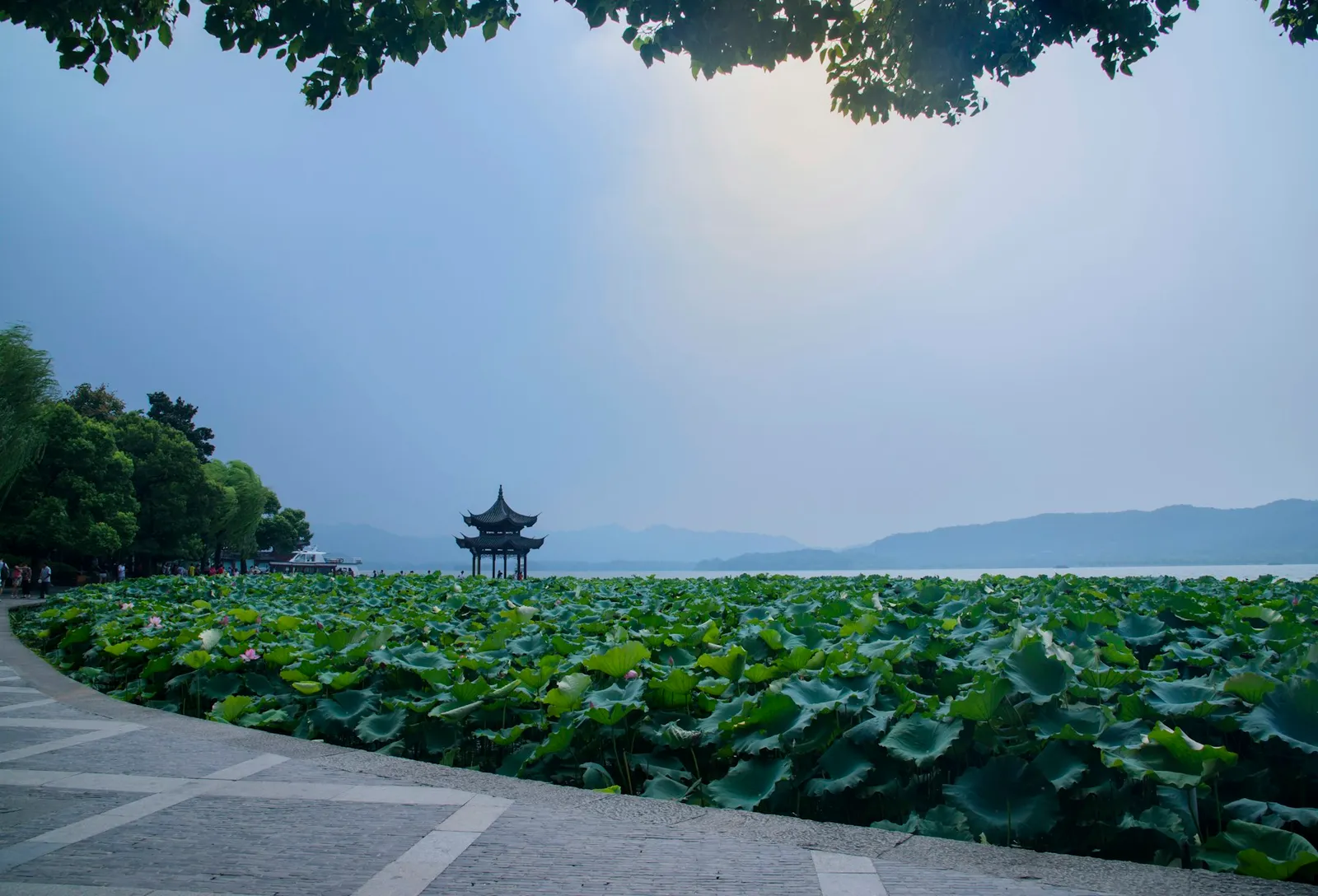
At the Summer Palace — 颐和园, I’d leave room for the lake. Choose a stretch around Kunming Lake and the Long Corridor, walk until you find a view you like, and stay with it for a while. The buildings matter, but the water gives them space. On a clear afternoon, that wider landscape is a lovely change from the enclosed courtyards of the old city.
The Old Summer Palace — 圆明园 is a separate garden visit, despite how often the two appear together in itineraries. For a first trip I’d choose the Summer Palace for its lake and imperial architecture. Save Yuanmingyuan for another day if its landscape and history particularly interest you. Two large gardens can easily become a lot of walking with very little lingering.
Fragrant Hills: go for the color, choose your own climb
Fragrant Hills — 香山 is the outing I’d add for a different kind of autumn: slopes of mixed reds and golds, stone steps, and views through the trees. Give it its own day rather than fitting it between central-city sights.
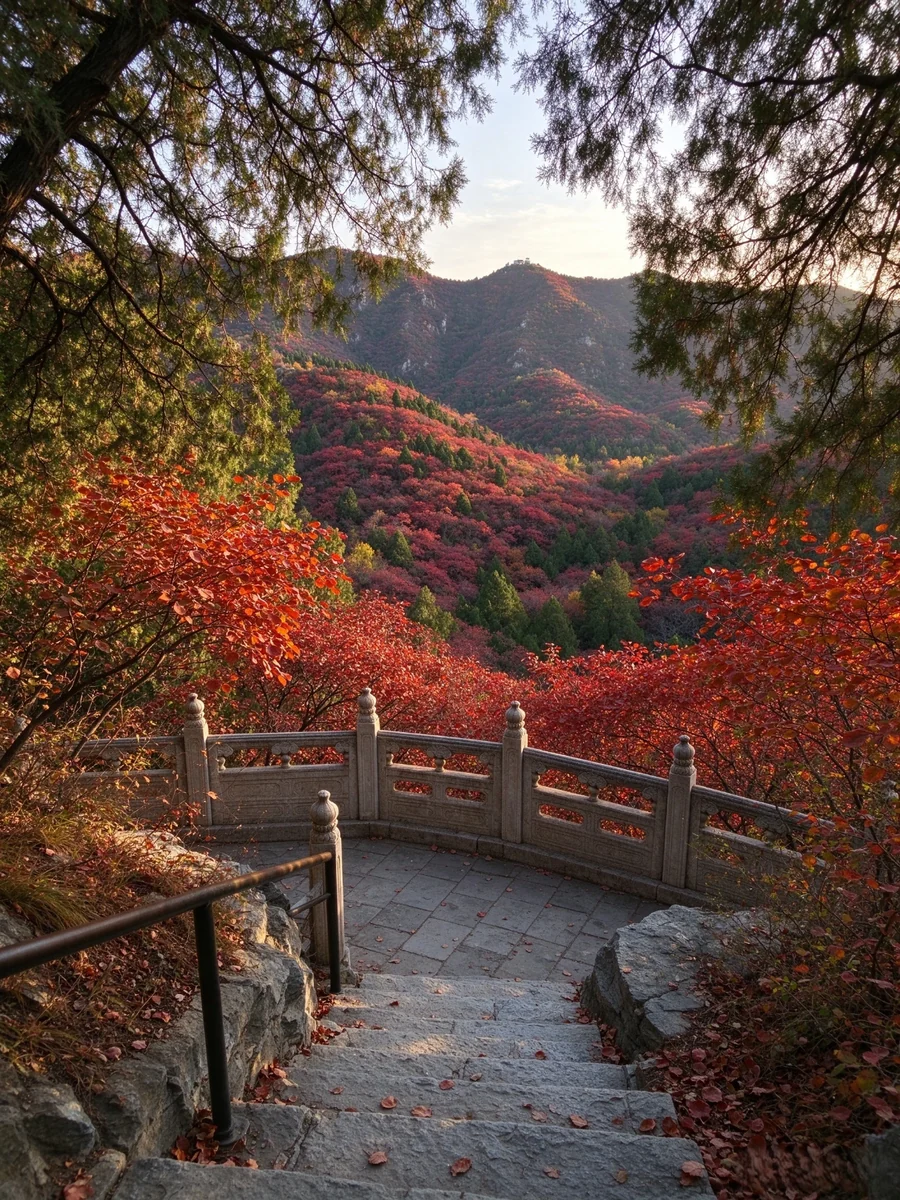
You can make a visit of the lower gardens and paths, or go with the intention of climbing higher. Decide that before setting off, especially with children or anyone who dislikes long descents. Reaching a summit is a different aim from spending an afternoon looking at leaves.
There is one detail to build into this season’s plan: The park's October 19, 2026 notice says the cable car is temporarily out of service for an upgrade. Plan to walk back down; the dated park notice matters more than an older itinerary suggesting a cable-car return.
This is also where a stay at Fragrant Hill Hotel earns its place. If you’re already heading west for the park and would enjoy another slow garden morning, an overnight stay has a purpose. If you only want a hill walk, a day outing is enough.
When to go, and how I’d divide the days
For golden ginkgo, aim around late October into early November and keep the order of the outings flexible. Beijing's park guide gives late October to early November as the usual ginkgo-viewing window at the Temple of Heaven. Trees elsewhere can turn at a different pace; look for recent photos of your chosen park rather than treating a calendar date as a guarantee.
For three autumn outings, I’d keep this simple:
- Old-city day: Ditan, Guozijian, and a Wudaoying meal. Let this be the day with the fewest fixed plans.
- Garden day: the Summer Palace, with time by the lake. Choose Jingshan and Beihai instead if you want to stay around the old city.
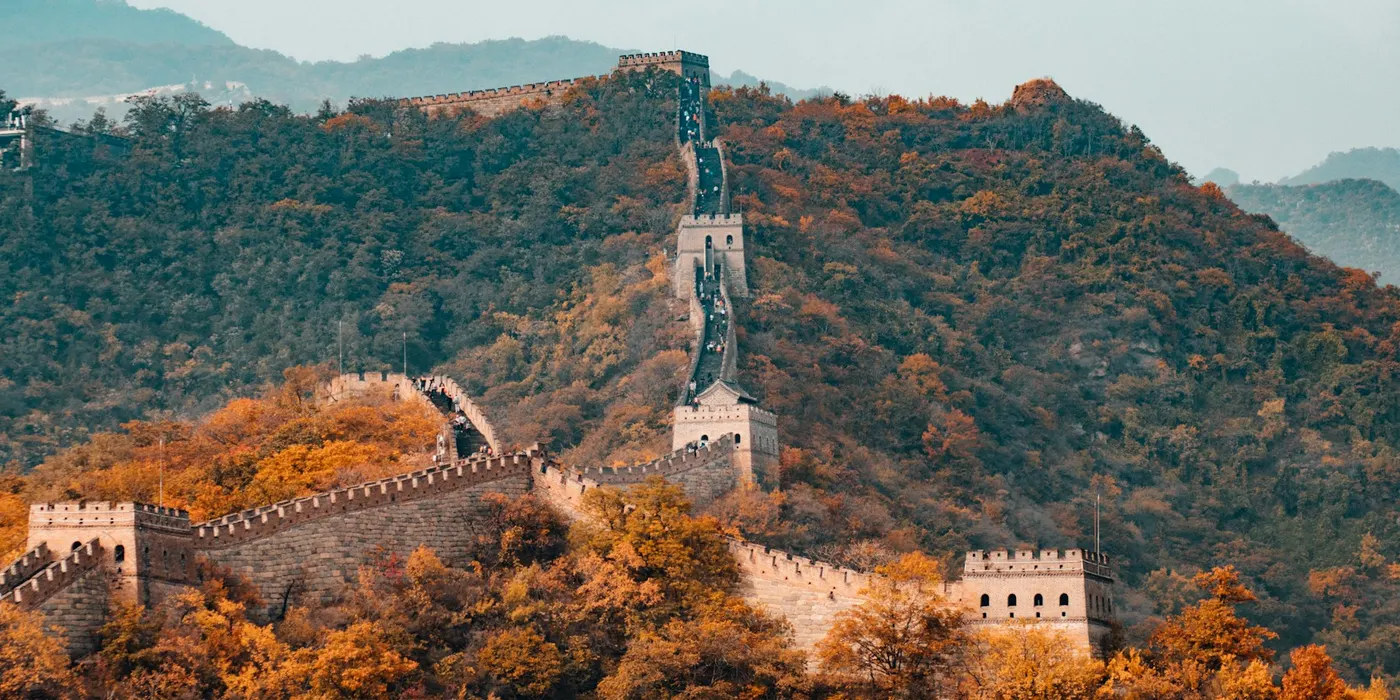
- Hill day: Fragrant Hills, with an optional garden-hotel night. If the Great Wall is the main reason for your Beijing visit, give that the day instead; our Mutianyu and Badaling comparison can help you choose.
Bring comfortable shoes and a layer that cuts the wind by the water. Keep the Chinese place names handy for maps and taxis. And when you find the light you came for, give yourself permission to miss the next stop. An afternoon under the ginkgo trees can be a very good afternoon in Beijing.