On this page
For a first trip to Chengdu, stay near Chunxi Road and Taikoo Li. It's the middle of the city, Lines 2 and 3 cross right there, and you can walk to food, shopping and the evening crowds. If you'd like something calmer and a little cheaper, look at the streets around People's Park and Tianfu Square, or near Wenshu Monastery. Kuanzhai Alley suits a short stay built around old-Chengdu lanes, but check the room carefully. Whatever area you pick, the hotel's distance to a metro exit matters more than its distance to a landmark on the map.
Which area should I choose?
Chengdu is flat and the metro is extensive, so you don't need to sleep next to every sight. Most of what first-time visitors want, from the panda base to Wuhou Shrine and Jinli, is a short metro or taxi ride from the centre. Pick the area by how you'd like your evenings to feel.
| Area | Nearest metro | Good for | Watch out for |
|---|---|---|---|
| Chunxi Road and Taikoo Li (春熙路 / 太古里) | Chunxi Road, Lines 2 and 3 | First visit, shopping, eating late, easy transfers | Crowds, noise, higher prices, some tired older buildings |
| Tianfu Square and People's Park (天府广场 / 人民公园) | Tianfu Square, Lines 1 and 2; People's Park, Line 2 | Central but calmer, tea houses, Kuanzhai Alley within reach | Older housing blocks, some dated hotels |
| Wenshu Monastery (文殊院) | Wenshu Monastery, Line 1 | Quiet streets, local snacks, still close to the centre | Fewer big hotels, quiet after dark |
| Kuanzhai Alley (宽窄巷子) | Kuanzhai Alley, Line 4 | Old-Chengdu atmosphere, evening walks | Busy at weekends, noisy street-facing rooms, old guesthouses |
| Yulin (玉林) | Bus or taxi to the centre | Small restaurants, bars and coffee, local feel | Narrow roads, late-night bar noise, less convenient for the metro |
| Hi-tech zone and Financial City (高新区 / 金融城) | Line 1 | Business hotels, newer rooms, the southern side of the city | Far from the old centre and its atmosphere |
Save the Chinese name of your area and the nearest station. When you compare listings, pin the metro station, not the landmark, and check how far the hotel really is.
Chunxi Road and Taikoo Li: the easy first choice
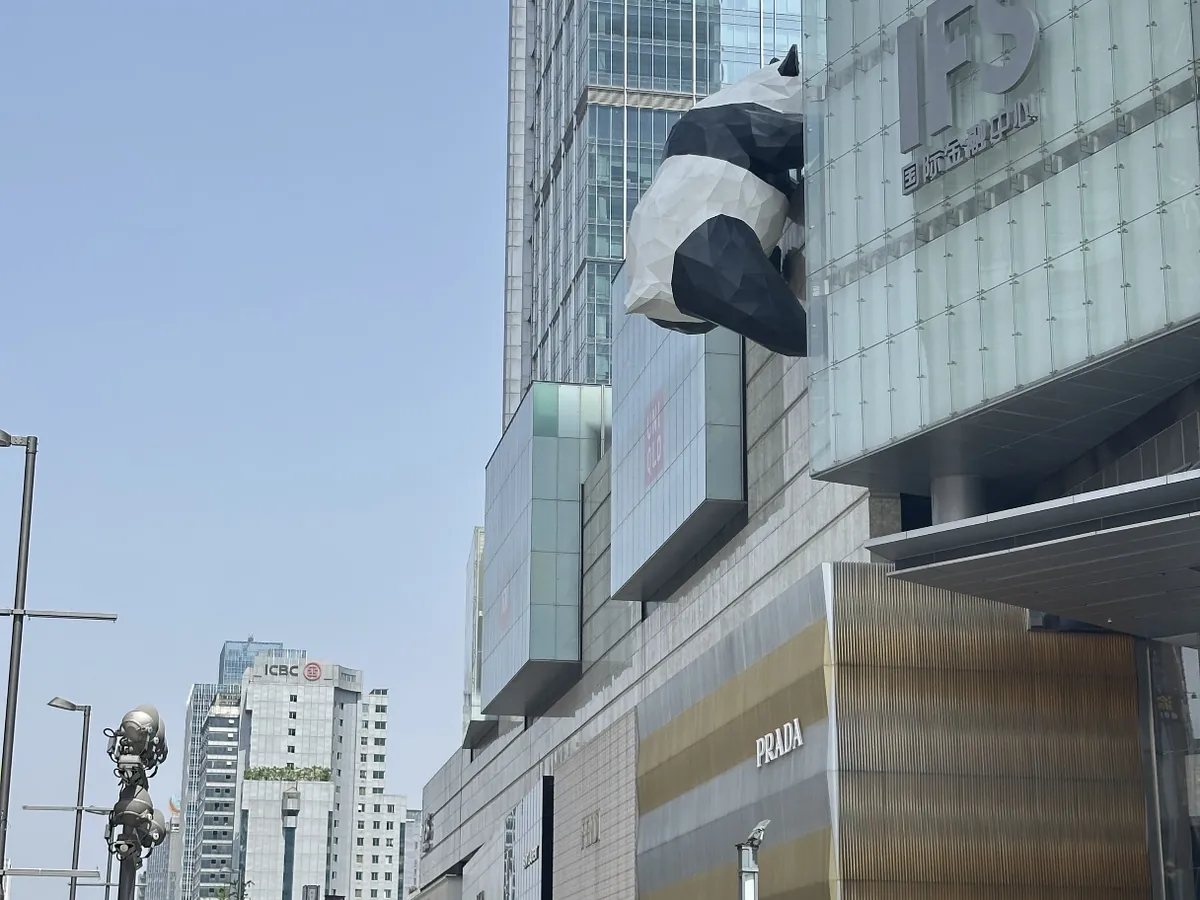
This is what most Chengdu locals suggest to friends coming for the first time. Chunxi Road, IFS (the mall with the giant panda climbing the side) and Taikoo Li sit together, and the Chunxi Road station joins Lines 2 and 3. Line 2 goes straight to Chengdu East Railway Station, Line 3 goes north towards the panda base area, and Tianfu Square is one stop away for Line 1.
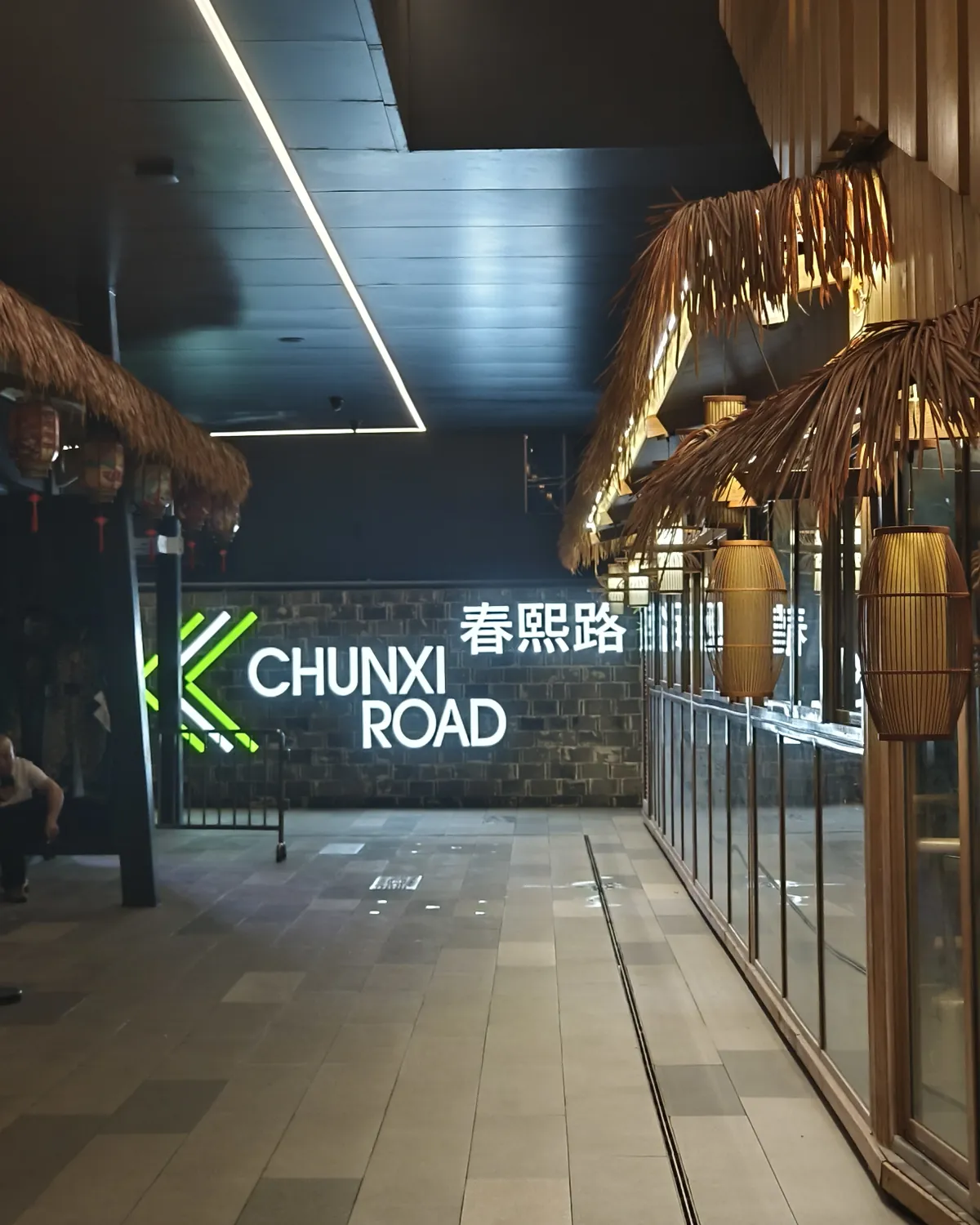
Travellers on Rednote are consistent about the trade-offs. The location is excellent, especially if you're out late or doing a packed itinerary. But the area is loud, prices are higher at weekends and holidays, and some of the older hotels and apartment-style rentals have small rooms, worn fittings and slow lifts in crowded towers. A hotel called "Chunxi Road" or "Taikoo Li" in its name may also be a long walk from the station; one hostel guest complained that hers was well over a ten-minute walk with luggage.
What to look for here:
- Distance on foot to the Chunxi Road station or Taikoo Li, measured in the map app, not taken from the listing.
- A room on a higher floor, away from the street, if you sleep lightly.
- Recent guest photos, because some buildings look much older in person than in the listing photos.
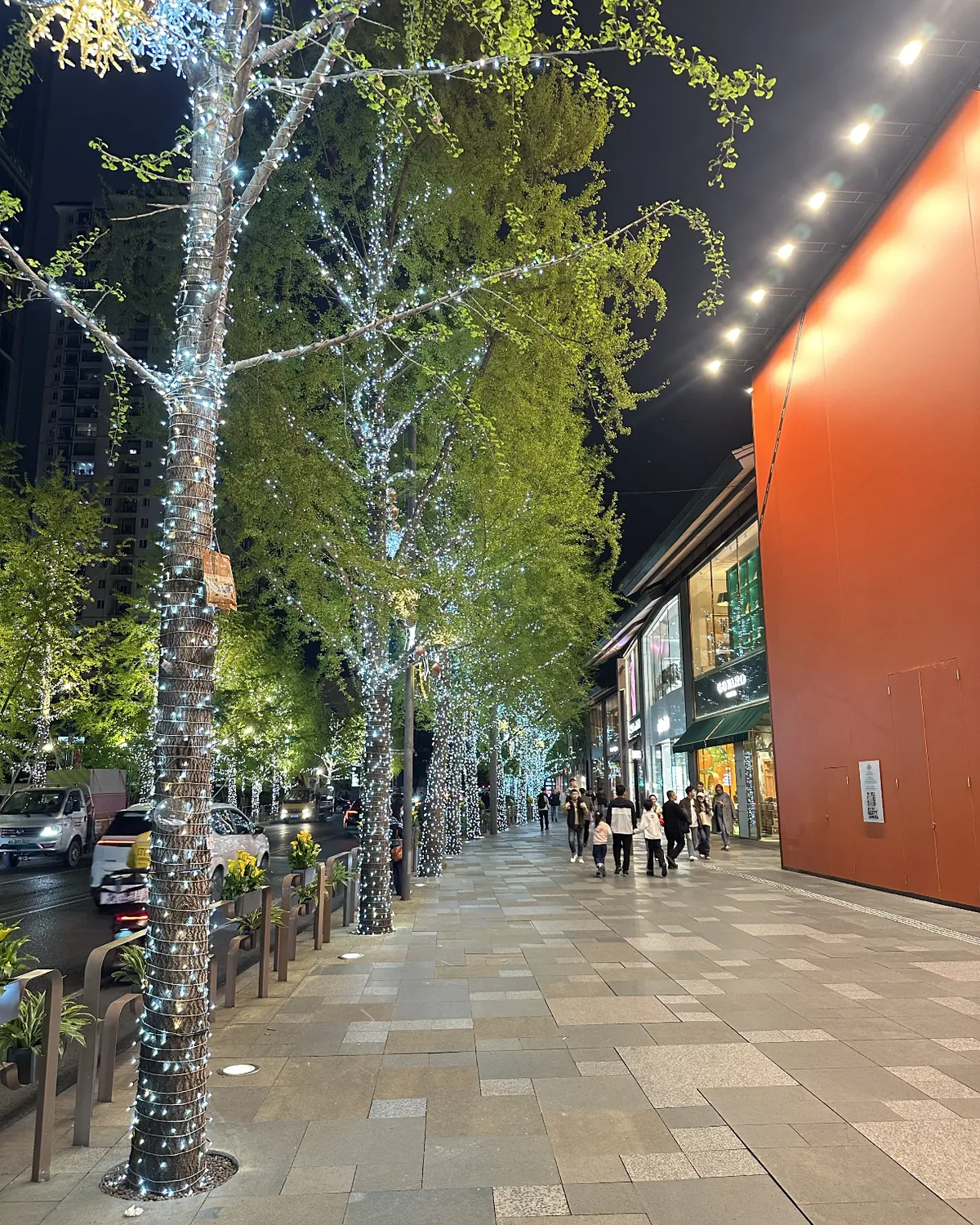
Taikoo Li is at its best after dark, which is exactly why rooms facing its lanes can be noisy until late.
Tianfu Square, People's Park and Wenshu Monastery: central but calmer
If you'd rather not sleep in the middle of the shopping crowds, these neighbourhoods are just as central for getting around. Tianfu Square is where Lines 1 and 2 cross, People's Park has some of the city's best-known tea houses, and Kuanzhai Alley is a short ride away. Rednote posters who live in Chengdu call this the better-value choice, with the catch that many buildings are older residential blocks.
Wenshu Monastery, north of the centre on Line 1, is quieter still. The lanes around the temple are full of small snack shops and teahouses, and it feels more like a neighbourhood than a tourist strip. It's a good fit for a slower trip or a second visit.
Kuanzhai Alley: atmosphere, with conditions
Staying beside Kuanzhai Alley means you can walk the old lanes early in the morning before the tour groups and again in the evening when the lanterns are on. Some of the boutique hotels in converted courtyard houses are lovely.
The risks are the ones Rednote posters keep repeating. Prices near the scenic area rise at weekends and holidays. Cheap guesthouses in older buildings can be tired, and rooms facing the main road are noisy at night. And the lanes themselves are pedestrian, so a car can't always take you to the door; check where your driver can stop. If the room looks great and the reviews mention quiet nights, it's a fine base. If it's simply the cheapest bed near the alley, the People's Park side is usually a better deal.
Yulin and the hi-tech zone: for particular trips
Yulin, south of the centre, is where a lot of Chengdu's small restaurants, bars and cafés are. It's a lovely area to eat in and has a relaxed local feel. It's less handy as a base for sightseeing by metro, the roads are narrow and the bars stay open late. Stay here if food and evenings matter more to you than ticking off sights.
The hi-tech zone and Financial City, along Line 1 to the south, have newer business hotels and international chains at lower prices than in the old centre. They suit work trips or a late arrival before moving on. For a holiday, the commute into the old centre gets old quickly.
What about the railway stations and airports?
Hotels next to the railway stations are convenient for one early departure, but there isn't much to see or eat around them, and locals generally advise against basing a whole trip there. Chengdu East, the main high-speed station, is a direct ride from Chunxi Road on Line 2, so a central hotel works fine for train days too.
Tianfu Airport is far southeast of the city, which makes an airport hotel reasonable only for a very early flight. The Chengdu arrival guide explains the metro routes from both airports and the main stations.
How do I check a Chengdu hotel before booking?
A few checks catch most of the problems Rednote posters run into:
- Pin the metro station and measure the walk. Aim for a short walk to a station on Line 1, 2, 3 or 4, ideally with an exit on your side of the road.
- Look for a hotel that accepts foreign guests. The NIA says hotels are responsible for registering foreign guests' accommodation and submitting the information to local public security authorities. Chain and international hotels deal with foreign passports every day; small guesthouses and short-term apartments may not, so confirm before paying.
- Read recent reviews for noise, lifts and photos. These are the three complaints that come up most in the centre.
- Check where a car can stop. Around Kuanzhai Alley and Taikoo Li, some streets are pedestrian only.
- Save the Chinese name and address. Drivers and staff will understand them immediately.
Plan the rest of your Chengdu stay
Once you've chosen an area, the Chengdu arrival guide covers getting from Tianfu, Shuangliu or Chengdu East to your hotel. The panda base guide and the tea and Sichuan food guide are good next reads, and the China where-to-stay guide compares bases across the other big cities. The Chengdu city guide has the rest of the planning.