On this page
For a first trip, eat Beijing in three layers: one proper roast duck dinner, one copper-pot mutton hotpot on a cold night, and a run of old-Beijing snacks in between. When you want a vetted, good-value table near where you are, use the MICHELIN Guide's Bib Gourmand list for Beijing, which was refreshed in late October 2026. Have Alipay or WeChat Pay working before you sit down, and carry the dish names in Chinese characters so you can point.
*Checked against the MICHELIN Guide China announcement and the Beijing municipal government's English portal on 10 November 2026.*
What did the 2027 MICHELIN Guide Beijing add?
The 2027 MICHELIN Guide Beijing selection, announced on 27 October 2026, lists 107 Beijing restaurants: two with three stars, five with two stars, 26 with one star, 32 Bib Gourmand picks and 42 Selected restaurants.
At the top end, Chao Shang Chao (潮上潮, Chaoyang) and Xin Rong Ji (新荣记, Xinyuan South Road) kept their three stars. Those are special-occasion rooms. For a first-timer, the Bib Gourmand list is the more useful half of the guide: it is Michelin's category for good food at friendly prices, and in Beijing it now reaches down to neighbourhood snack shops.
Seven Beijing restaurants joined the Bib Gourmand list for the first time, including two old-Beijing snack shops: 陈记卤煮小肠 (Chen Ji Luzhu Xiaochang, braised offal stew) and 万红路羊汤烧饼店 (Wanhong Road lamb soup and shaobing).
The other new Bib picks cover regional Chinese cooking rather than Beijing food: Shandong, Fujian, Cantonese, Sichuan and Zhejiang kitchens. The same release also added Tianjin to the guide for the first time, which is handy if you are taking a day trip there.
How to use the guide without wasting a meal
- Open the MICHELIN Guide website or app, choose Beijing, and filter by Bib Gourmand.
- Sort by what is near your hotel or that day's sightseeing, not by the whole city. Beijing is big, and a cross-town taxi for one bowl of stew rarely makes sense.
- Read each restaurant's own guide page for its current address, opening days and booking notes on the day you plan to go. This guide deliberately leaves those details out, because they change and the guide page is the place to check them.
- Save the restaurant's Chinese name as well as the English one. Drivers and map apps find the Chinese name faster.
Which winter dishes should you order in Beijing?
Cold months are the best time to eat here. These are the dishes I'd put on a first-timer's list, with the Chinese to show staff.
Mutton hotpot, 涮羊肉 (shuan yangrou). Eating mutton hotpot has long been a winter tradition for Beijingers: thin lamb rolls cooked in a clear broth and dipped in sesame paste. The tall copper pot with a chimney in the middle is the Beijing style, and it is very different from the chilli-heavy hotpot of Sichuan and Chongqing.
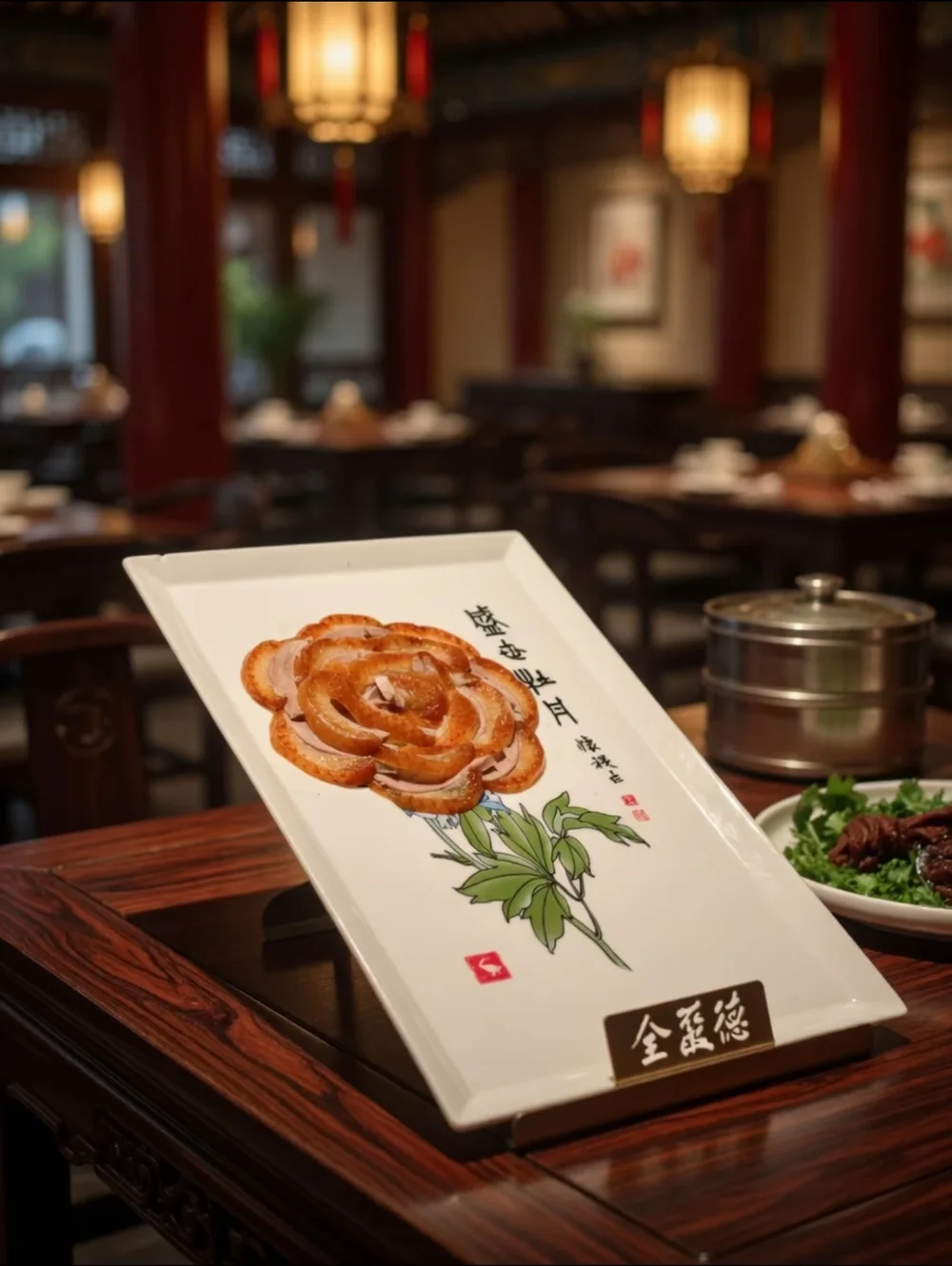
Peking roast duck, 北京烤鸭 (Beijing kaoya). Bianyifang roasts its ducks in a closed oven and Quanjude over an open flame fuelled by fruit-tree wood, and both roasting techniques are on China's national intangible cultural heritage list. You wrap the sliced duck in thin pancakes with sweet bean sauce, spring onion and cucumber.
Tanghulu, 糖葫芦. Tanghulu is a traditional winter snack in northern China, especially Beijing: candied fruit, traditionally Chinese hawthorn, on a bamboo skewer with a hardened sugar coating. Strawberry and grape versions are common now. Sugar-roasted chestnuts, 糖炒栗子, are the other cold-weather street snack to look for.
Beijing barbecue, 炙子烤肉 (zhizi kaorou). Beef or lamb cooked on a round iron grill, which the city portal suggests pairing with a bottle of Beibingyang soda.
Old-Beijing breakfast and snacks. 卤煮 (luzhu) is a rich offal and bread stew; 炒肝 (chaogan) is stewed pork liver and intestine in a thick sauce; and the one locals love to test visitors with is douzhi. Douzhi, a sour fermented mung bean drink, is normally drunk with pickled turnip slices and a fried flour loop called jiaoquan, and it takes a few tries to get used to. Try a sip before ordering a full bowl.
Beijing pastries, 京八件 (jing ba jian). A box of eight traditional pastries is a good gift to carry home, and an easy way to taste several fillings at once.
Where to try them first
You do not need a starred room for any of these. The city's official English portal lists Donglaishun at Beijing APM on Wangfujing Avenue, Jubaoyuan on Niujie Street and Nanmen Shuanrou east of the Temple of Heaven's South Gate for mutton hotpot, and Quanjude's Qianmen branch and Bianyifang's Xianyukou branch for roast duck.
Those picks come from the city's November 2025 food map, so check each place's current details before you head out. They also line up with the neighbourhoods that make eating easy on foot:
- Qianmen and Dashilar, south of Tiananmen Square, for the old roast duck houses.
- Wangfujing and Dongsi, where many first-time visitors stay, for hotpot and pastry shops a short walk from the hotel.
- Niujie, Beijing's historic Hui Muslim neighbourhood in Xicheng, for halal hotpot and snacks.
- Shichahai and Houhai, for barbecue near the lakes after an afternoon in the hutongs.
If you have not booked a hotel yet, a base in Dongcheng puts most of these within a short metro ride. Compare areas in where to stay in Beijing.
How to order and pay
- QR menus. Many restaurants put a QR code on the table; you scan it, order and pay on your phone. If you are stuck, raise a hand and point to the dish name in Chinese on your screen.
- Payment. Expect to pay by scanning with Alipay or WeChat Pay, and set one up before you arrive. Our guides to Alipay with a foreign card and payment failures cover the usual problems.
- Hotpot. Order the lamb by the plate, then add vegetables, tofu and noodles. Ask for 麻酱 (majiang, sesame sauce) if it does not arrive with the pot.
- Duck. Most duck restaurants sell a whole bird (一只) or a half (半只). For two people who also want a few side dishes, I'd start with a half.
- Allergies and diet. Write your allergy in Chinese on a card or in a translation app and show it before you order, not after the food arrives.
A simple three-day eating plan
- Day 1: roast duck dinner near Qianmen after a day around Tiananmen and the Forbidden City.
- Day 2: old-Beijing breakfast, a hutong walk, then barbecue near Houhai.
- Day 3: a Bib Gourmand lunch close to that day's sights, and copper-pot hotpot in the evening.
For slower days in the city, see Beijing without rushing. More regional food guides are in our China food hub, including Shanghai for first-timers, and the rest of the city is covered in our Beijing travel guide.