On this page
For a first meal in Shanghai, split the day in two. Mornings and quick stops are for the snacks the city is famous for: shengjianbao (pan-fried pork buns with a crisp base) and xiaolongbao (steamed soup dumplings). Dinner is for benbang cai, the local home-style cooking: braised pork belly in a dark, sweet sauce, stir-fried eel shreds finished with sizzling oil, a pot of salted-and-fresh pork soup with bamboo shoots, and a bowl of lard-scented vegetable rice. Order a mix of one braised dish, one seafood or eel dish, one green vegetable and one soup, and you have a proper Shanghai table without guessing.
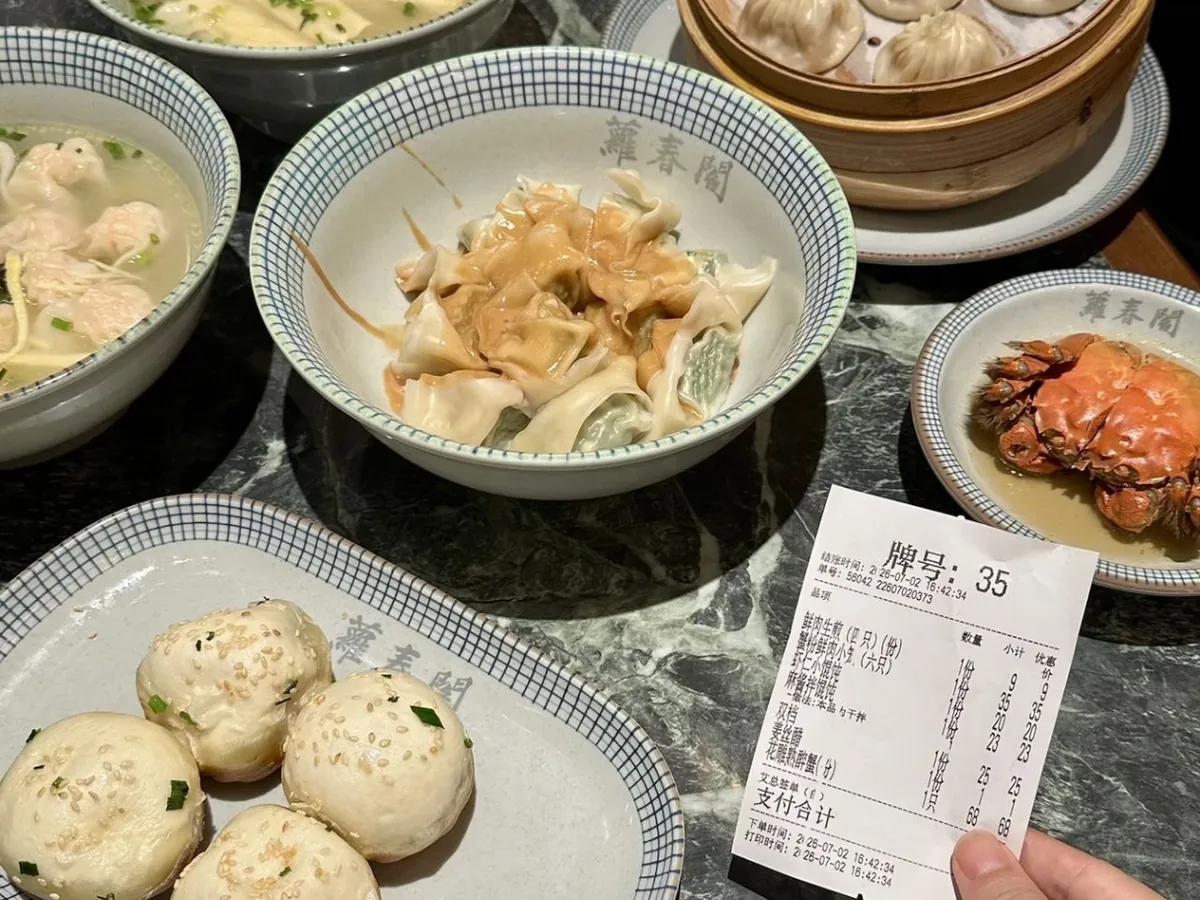
What should I eat on my first day in Shanghai?
If you only have a day or two, this short list covers the flavours that make Shanghai different from Beijing or Sichuan. Shanghai food leans sweet and savoury rather than spicy, with a lot of soy, sugar and Shaoxing wine in the braises.
| Dish | Chinese | What it is | When to have it |
|---|---|---|---|
| Shengjianbao | 生煎包 | Pork buns fried in a wide pan, soft on top, crunchy underneath, with soup inside | Breakfast or a late-afternoon snack |
| Xiaolongbao | 小笼包 | Small steamed dumplings with thin skin and hot broth | Breakfast, lunch, or as one dish in a bigger meal |
| Hongshao rou | 红烧肉 | Pork belly braised until soft in soy sauce and sugar | Dinner, with rice |
| Xiangyou shansi | 响油鳝丝 | Eel shreds in a dark sauce, topped with hot oil at the table | Dinner |
| Yanduxian | 腌笃鲜 | Soup of salted pork, fresh pork and bamboo shoots | Dinner, best in spring |
| Youbao xia | 油爆虾 | Small river shrimp flash-fried in a sweet glaze, eaten shell and all | Dinner |
| Zhuyou caifan | 猪油菜饭 | Rice cooked with greens and a little lard | Instead of plain rice |
| Congyou banmian | 葱油拌面 | Noodles tossed in scallion oil and soy | A cheap lunch on its own |
Save the Chinese names to your phone. Menus in older places are often Chinese only, and pointing at the characters is quicker than any translation app.
How do I eat shengjianbao without burning my mouth?
Shengjianbao are the snack I'd put first, because they are cheap, filling and found all over the old centre. The city's own food pages describe them as buns wrapped around fresh pork and set pork-skin jelly, fried in a flat pan, then steamed under a lid with a splash of water until the bottoms turn golden. Scallion and sesame go on at the end. The jelly melts into soup while they cook, which is the whole point and also the danger.
Bite a small hole in the side, let the steam out, and drink the soup before you eat the rest. Don't bite straight down into a fresh one; the broth squirts, and it is properly hot. Travellers on Rednote say the same thing again and again: watch out for the soup spraying onto your clothes and the table, and let the first one sit for a moment.
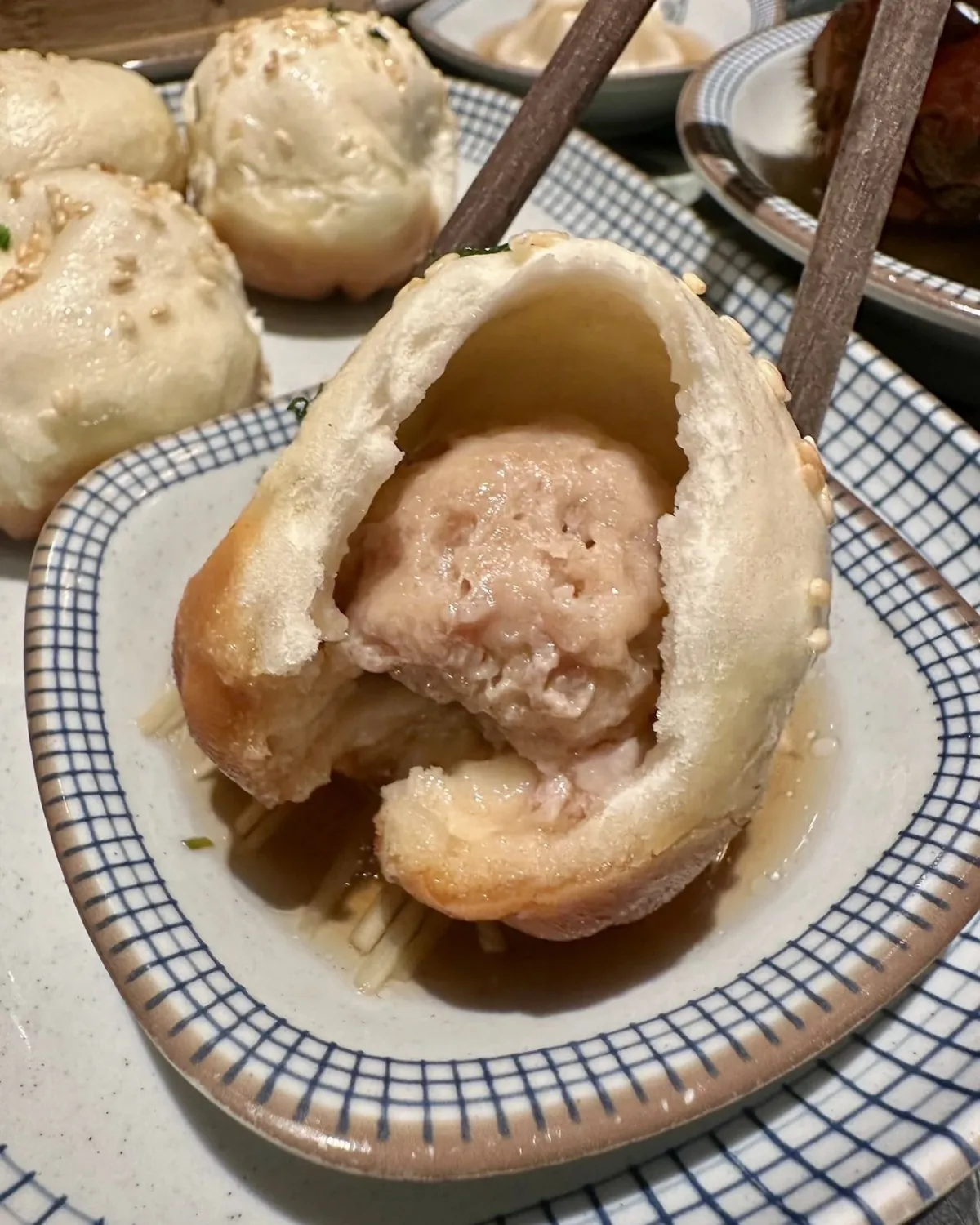
Shengjianbao are sold by the *liang* (两), a traditional weight unit, and one liang is usually a portion of four buns. If the menu shows a number with 两, that is what it means. Order one portion per person to start; you can always go back to the counter.
Two names come up most often. Xiaoyang Shengjian is a chain you will pass on almost any shopping street. Older shops such as Dong Tai Xiang are known for taking great care over the dough; the Shanghai government's food guide points to it as a classic address for this snack. Da Hu Chun, another old name with a branch near Nanjing Road, makes a breadier, fully risen bun that some people prefer. Rednote posts from Nanjing Road also send people to Luochunhe, an older chain with an open kitchen, as an alternative when the queue at the better-known names is long.
How do I eat xiaolongbao?
Xiaolongbao look like the easier dumpling, but the soup is just as hot. Shanghai's official guide gives a simple rule that locals repeat: lift gently, move slowly, open a small window, then drink the soup.
- Pick the dumpling up by the twisted top with chopsticks. Lifting from the side tears the skin.
- Put it on your spoon, not straight into your mouth.
- Bite a small opening, let the steam escape and sip the broth.
- Eat the rest with a little black vinegar and shredded ginger, which come on the side.
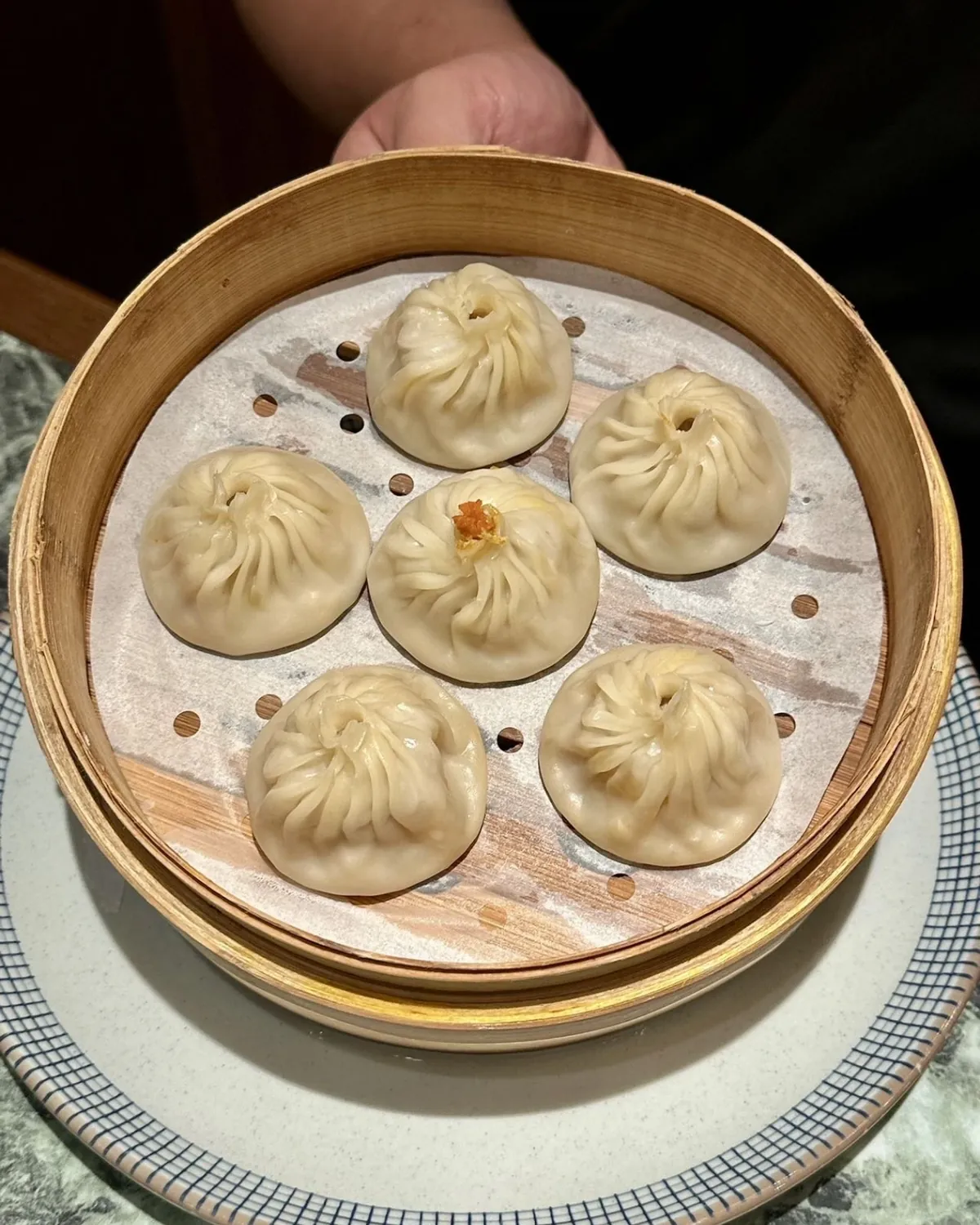
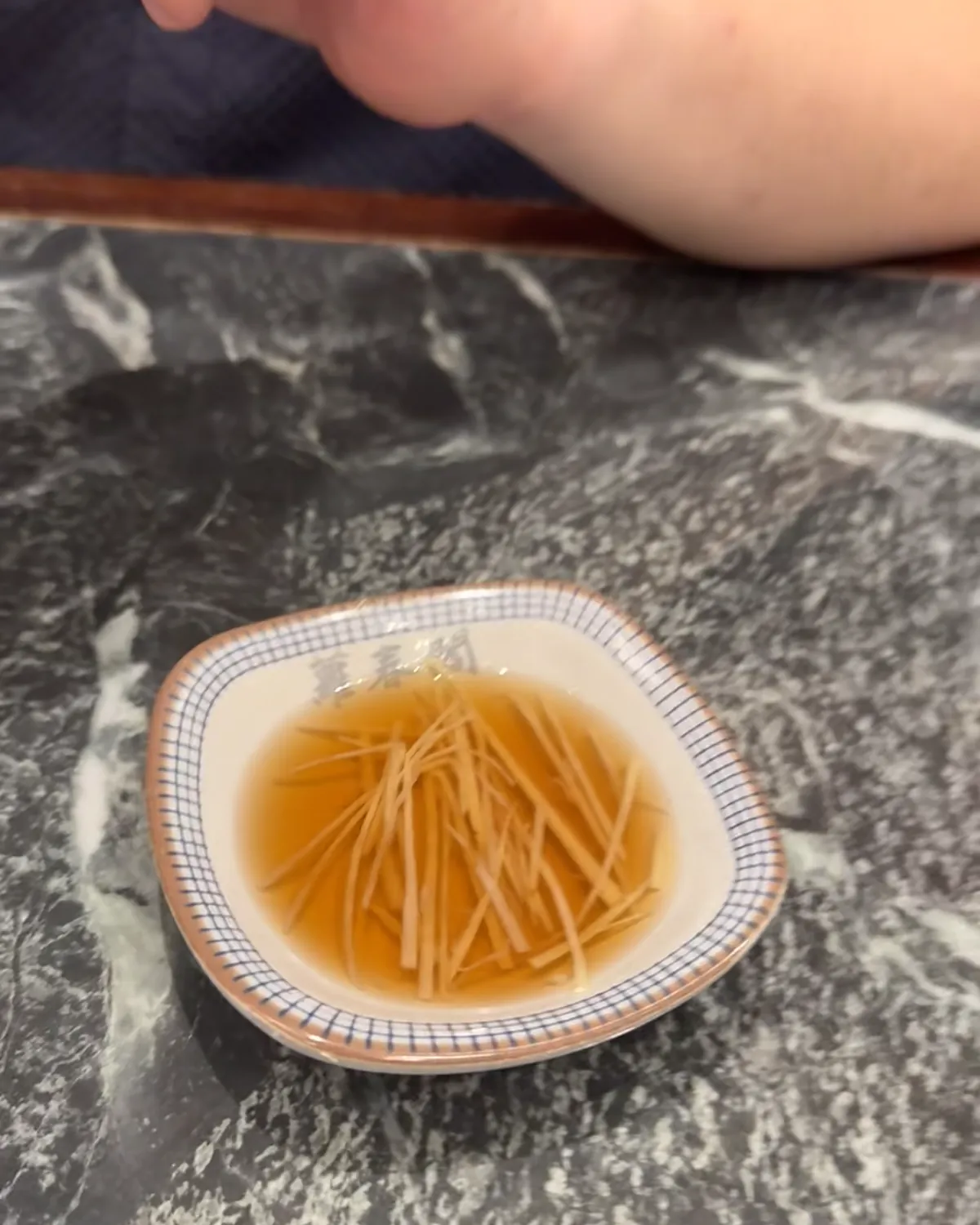
Pork is the standard filling. Crab versions are richer and cost noticeably more, and autumn is crab season, when crab-roe xiaolongbao are at their best. Some travellers on Rednote found the crab ones too fishy for their taste, so if you are unsure, order a basket of pork and a smaller crab portion to share rather than going all in.
Where to try them depends on where you are staying. The Shanghai government's 2026 food series lists Nanxiang Steam Bun Restaurant inside the Yuyuan Garden bazaar, Jia Jia Tang Bao on Huanghe Road near People's Square, and Wan Shou Zhai, a neighbourhood place in Hongkou known for its dumplings and wontons. Yuyuan is the most convenient if you're already sightseeing there, but expect a tourist queue. Jia Jia Tang Bao is the easier stop after a walk around People's Square or Nanjing Road.
What is benbang cai, and what should I order?
Benbang cai means local Shanghai cooking. The city's own description is "thick oil and red sauce": dishes are braised until the sauce soaks right through, so flavours are deep, sweet and savoury. It is home cooking rather than banquet food, and it is best eaten with rice in a group so you can share several dishes.
For two people, I'd order three or four dishes; for four people, five or six. A balanced first order looks like this:
- One braised dish. Hongshao rou is the obvious one. If you'd prefer something less fatty, try a braised fish or a braised pork chop (葱烤大排).
- One eel or seafood dish. Xiangyou shansi is the Shanghai signature, finished at the table with sizzling oil. Youbao xia, the small fried river shrimp, is the other classic.
- One green vegetable. Stir-fried greens with garlic, or caotou (草头), a clover-like spring green often cooked with a splash of liquor.
- One soup or rice dish. Yanduxian in spring, or zhuyou caifan any time.
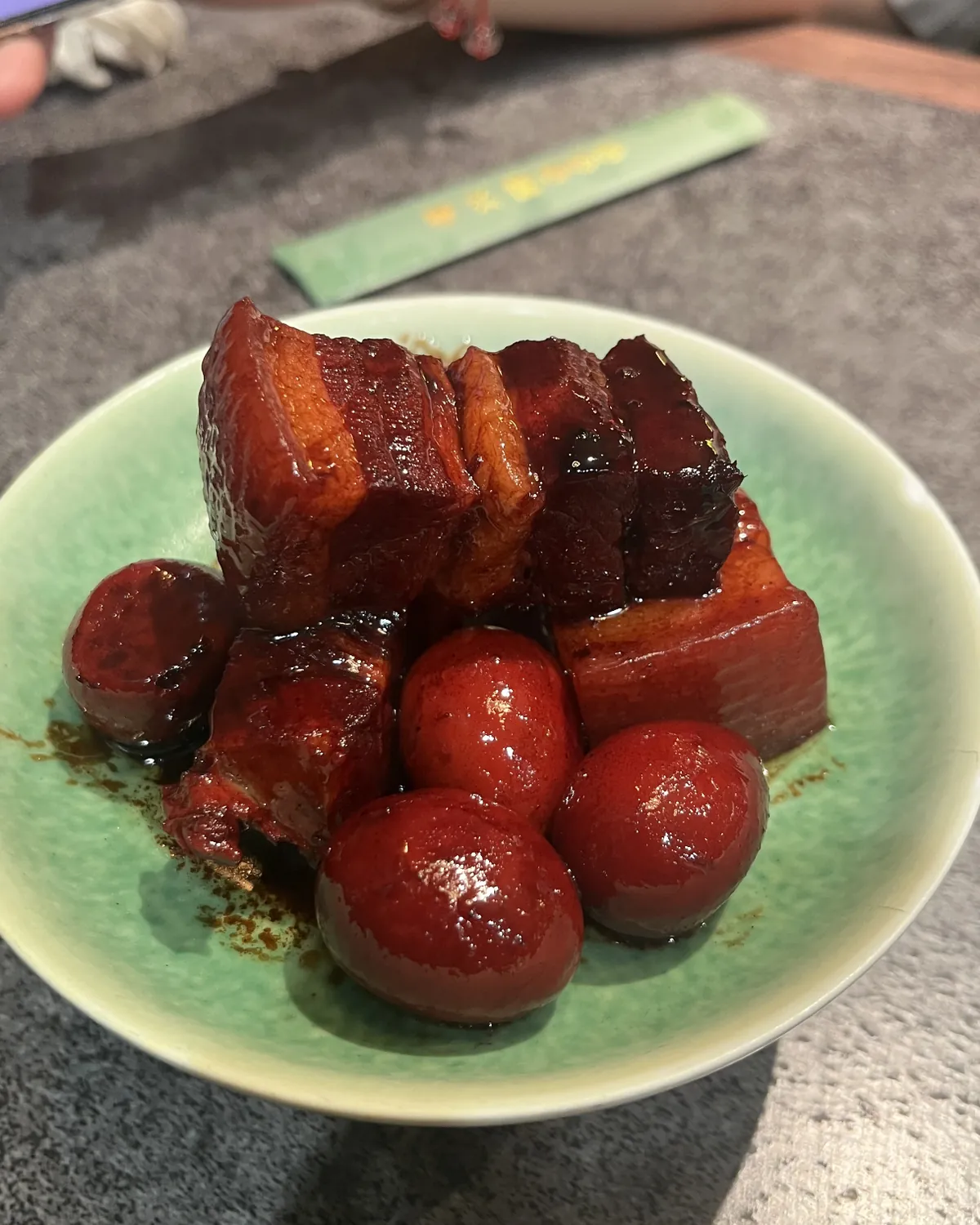
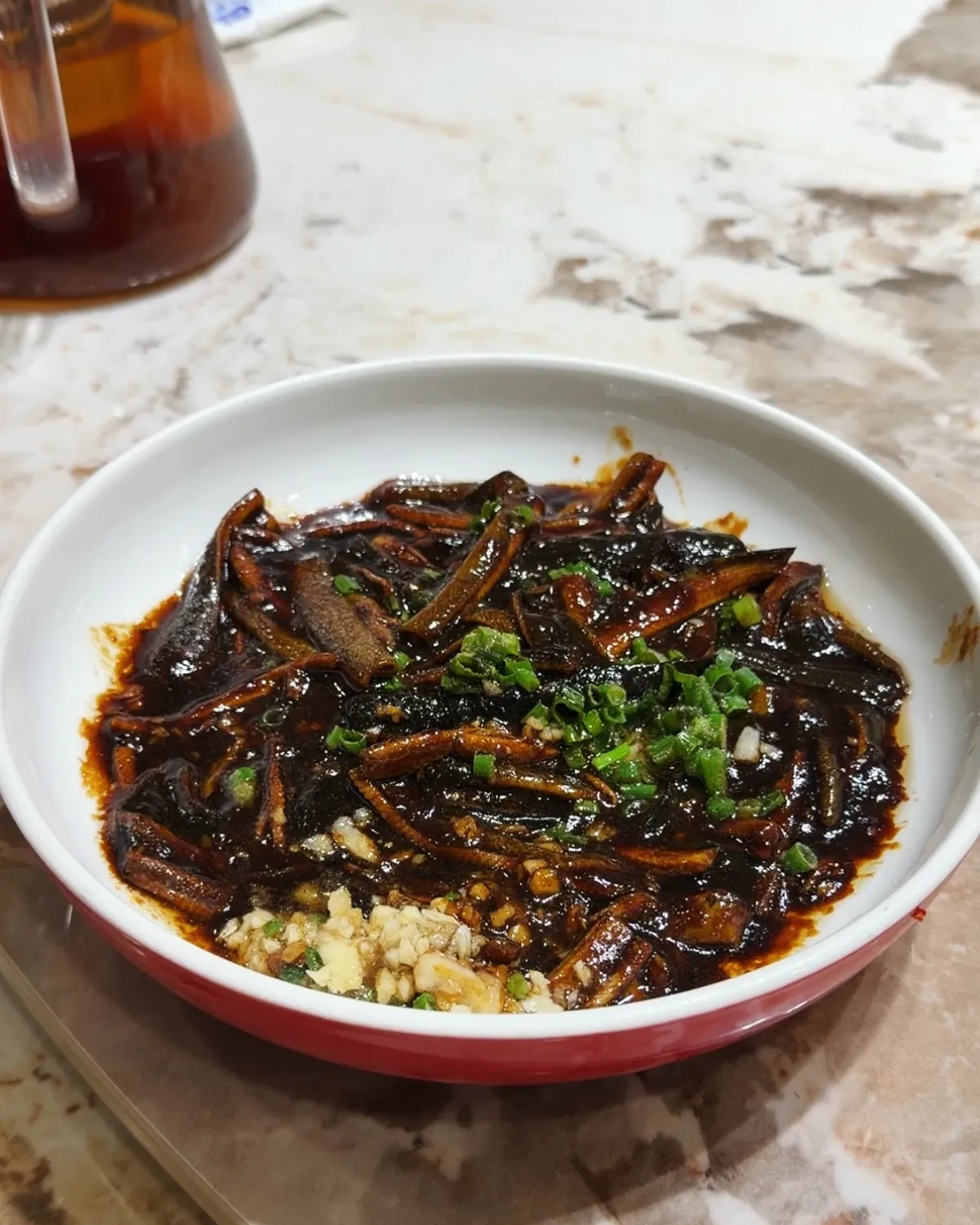
Rednote food posts give a few warnings worth repeating. Benbang cai is sweet, sometimes very sweet; if that worries you, ask for less sugar (少糖, *shǎo táng*) when you order. Seasonal dishes such as yanduxian and caotou are not always on the menu outside spring. The popular dishes, the shrimp especially, can sell out in the evening, so go earlier rather than later if there is a dish you came for.
Where should I go for my first benbang dinner?
Start with what's near your hotel rather than crossing the city for one famous name. Shanghai has two broad styles of local restaurant, and both are worth trying.
Small old-school places. Jinxian Road (进贤路) near Huaihai Road has a row of tiny, busy restaurants that Shanghai food lovers keep coming back to, including Lanxin and Maolong. They are cramped, loud and quick, and you may share a table. Rednote posters suggest going outside peak meal times, because the rooms are small and the queue moves slowly.
Newer, more comfortable chains. Places such as Xiaoping Fandian (晓平饭店) are popular with domestic visitors for a first benbang meal. They have picture menus, air conditioning and more space, which helps with parents or children. Many take queue numbers online through Dianping or WeChat; ask your hotel to help if the screen is only in Chinese.
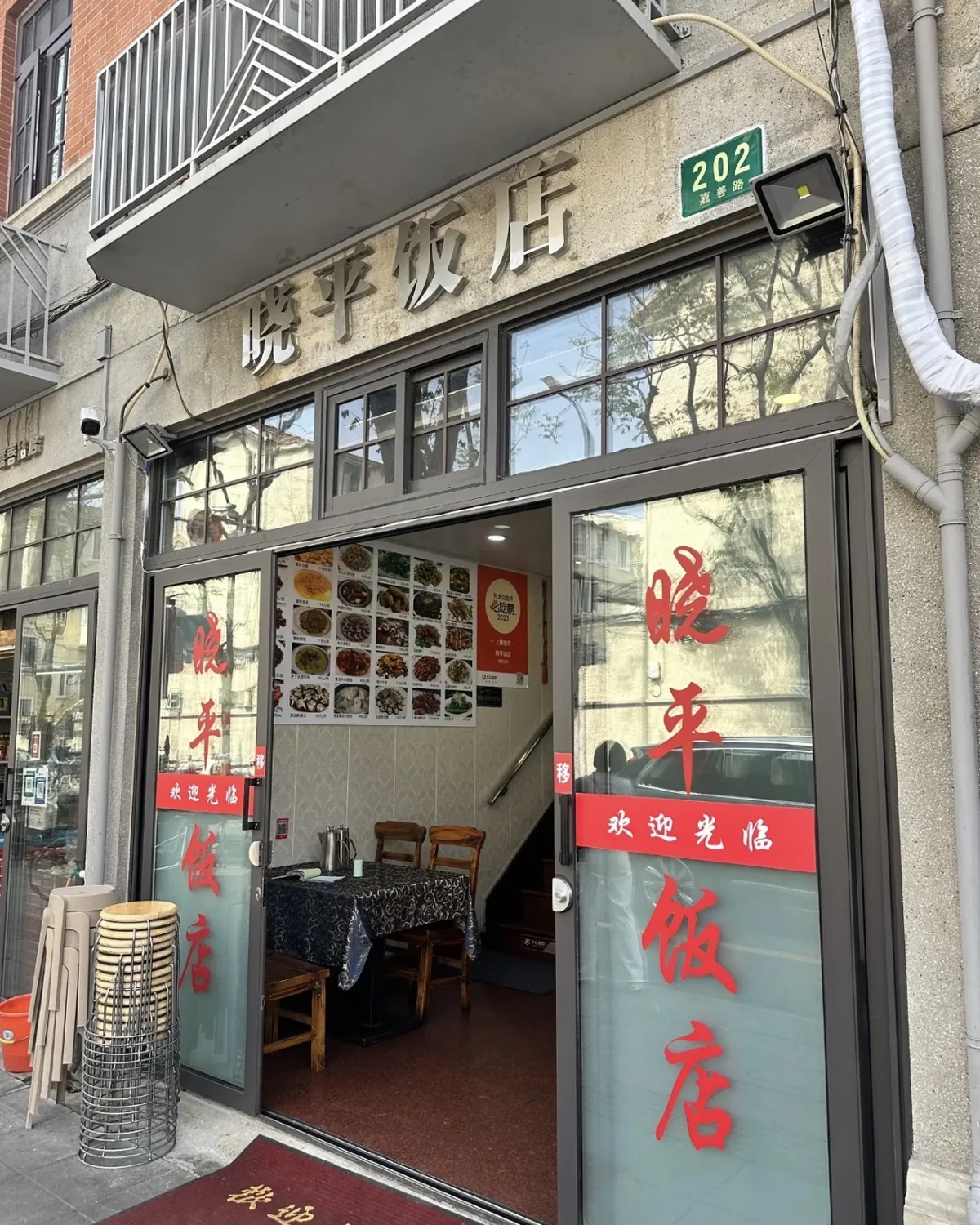
Near the Bund, several riverside restaurants serve benbang dishes with a view across to Pudong. You pay for the setting, and window seats go first, but for a family dinner on a first night it can be worth it. Rednote posters who brought older relatives liked these places for the space and attentive service more than the food itself.
How do I order and pay?
Most mid-range and popular restaurants now order by QR code. There is usually a code on the table: scan it, choose your dishes on your phone, and the order goes straight to the kitchen. To scan a merchant's QR code, open + → Scan in WeChat. Alipay works the same way through its Scan button.
Paying works the same way. At an Alipay checkout, you can scan the merchant's payment code or show your payment code for the cashier to scan. Small snack shops often have a payment code stuck to the counter; scan it, type the amount the staff tell you, and show them the confirmation screen.
Food allergies need more care, because menus rarely list ingredients. Carry an allergy card in Chinese that lists your own allergens, and show it to the people preparing your meal. Pork, shellfish, peanuts and sesame all turn up in Shanghai dishes in places you might not expect, including the oil in a dumpling dip and the sesame on shengjianbao.
Common first-time mistakes
- Ordering too much. Portions at benbang restaurants are generous, and braised pork is rich. Order fewer dishes and add one if you are still hungry.
- Biting straight into a hot bun. Both shengjianbao and xiaolongbao hold boiling soup. Open, sip, then eat.
- Expecting spicy food. Shanghai cooking is mild and sweet. If you want chilli, most snack shops have chilli oil on the table.
- Skipping rice. Braised dishes are made to be eaten with rice; the sauce is half the point.
- Arriving at peak time with a big group. Old-style places have small tables. Groups of five or more should go early or pick a larger chain restaurant.
Plan the rest of your Shanghai trip
Food areas line up nicely with the places most first-time visitors stay. People's Square and Nanjing Road put you close to dumpling shops and the Bund, while the former French Concession is the base for Jinxian Road and the small local restaurants. The Shanghai where-to-stay guide compares those areas, and the city walk guide and neighbourhoods and riverfront guide help you fit meals around sightseeing. If you are still landing, start with the Pudong Airport to hotel guide.
For the payment setup itself, the metro tickets and payments guide covers Alipay and cards in more detail. For other cities' food, see the China food guides, including Guangzhou dim sum ordering and Chengdu tea and Sichuan food. The Shanghai city guide has the rest.