On this page
Landing at Capital Airport (PEK)? Take the Capital Airport Express to Dongzhimen, Sanyuanqiao or Beixinqiao and change to the regular metro there. Landing at Daxing (PKX)? Take the Daxing Airport Express to Caoqiao, then Line 19 or Line 10. Arriving by high-speed rail at Beijing South, follow the signs down to Line 4 or Line 14; at Beijing West, it's Line 7 or Line 9. For all four, a taxi or DiDi is the better call once you add a late arrival, a child, or more bags than hands. Pay for the metro by tapping a foreign card or with the metro code in Alipay, and set that up before the flight, not in the arrivals hall.
Which route fits each arrival point?
The airport or station on your ticket decides almost everything. Capital sits northeast of the centre, Daxing is far to the south, and the two big railway stations are in the southwest quarter of the city. Here is where I'd start for a hotel in the old centre around Dongcheng, Wangfujing or the hutongs.
| You arrive at | First option to compare | Where the rail part ends | Switch to a car when |
|---|---|---|---|
| Capital Airport (PEK), T2 or T3 | Capital Airport Express | Sanyuanqiao (Lines 10, 12), Dongzhimen (Lines 2, 13), Beixinqiao (Line 5) | Late landing, heavy bags, hotel far from those lines |
| Daxing Airport (PKX) | Daxing Airport Express | Caoqiao (Lines 19, 10) | Late landing, or your hotel is in the north or east |
| Beijing South Railway Station | Metro Line 4 or Line 14 | Inside the station, one level down | Long taxi queue is the only reason to wait |
| Beijing West Railway Station | Metro Line 7 or Line 9 | Under the station | Bags plus a hotel that needs two changes |
None of this replaces the last few hundred metres. Hutong guesthouses in particular often sit on lanes a car can't enter, so screenshot the hotel's Chinese name, address and nearest metro exit before you fly.
Capital Airport (PEK): the express, then the right interchange
The Capital Airport Express is a separate line from the ordinary metro, with its own gates. It calls at Terminal 3, Terminal 2, Sanyuanqiao, Dongzhimen and Beixinqiao, according to the Capital Airport transport page. At Terminal 3 the platform is in the No. 3 parking building: after international arrivals, walk straight across the link bridge and the station entrance is on your right. At Terminal 2 it's in the basement, and signs for the Airport Express take you there by lift.
A ride on the Capital Airport Express is a flat 25 yuan, whichever of its five stations you get on or off at. Which stop to leave at depends on the hotel, not on which station sounds more central. For Guomao, Sanlitun or anything along the eastern Third Ring, get off at Sanyuanqiao and take Line 10. For the Lama Temple, Gulou or the Nanluoguxiang lanes, Dongzhimen (Lines 2 and 13) or the final stop at Beixinqiao (Line 5) usually leaves you with a shorter walk. Some of the smaller stations on these lines still have stretches of stairs, so with a big case it is worth checking for lifts on the station map, or skipping the metro altogether.
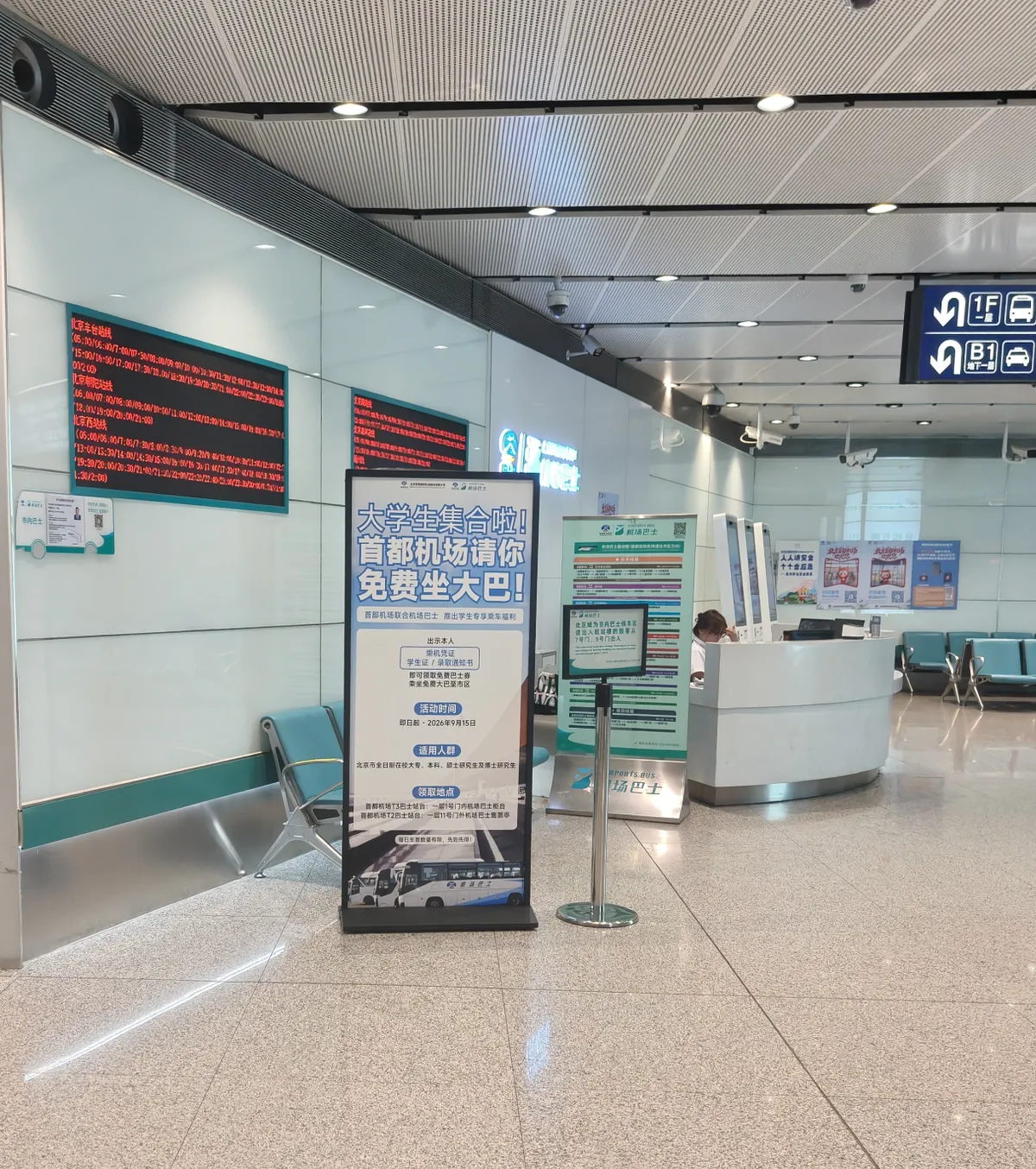
Trains into the city leave Terminal 3 from 6:22 to 22:52 and Terminal 2 from 6:36 to 23:10, roughly every ten minutes. If your flight is due in after about ten at night, I wouldn't plan around the last train; immigration and bags can easily eat the margin. Airport buses are the middle option: they go to hubs across the city, a few night routes keep going after the trains stop, and you never touch a staircase. The bus ticket counter at T3 is on the first floor just inside Door 1; at T2 it is on the first floor outside Door 11.
For a taxi, follow the taxi signs to the official rank rather than accepting an offer inside the hall. Ride-hailing pickups are in marked zones, and several travellers on Rednote said the walk to them was longer than they expected, so follow the airport's own "online car-hailing" signs rather than an app pin.
Daxing Airport (PKX): Airport Express to Caoqiao
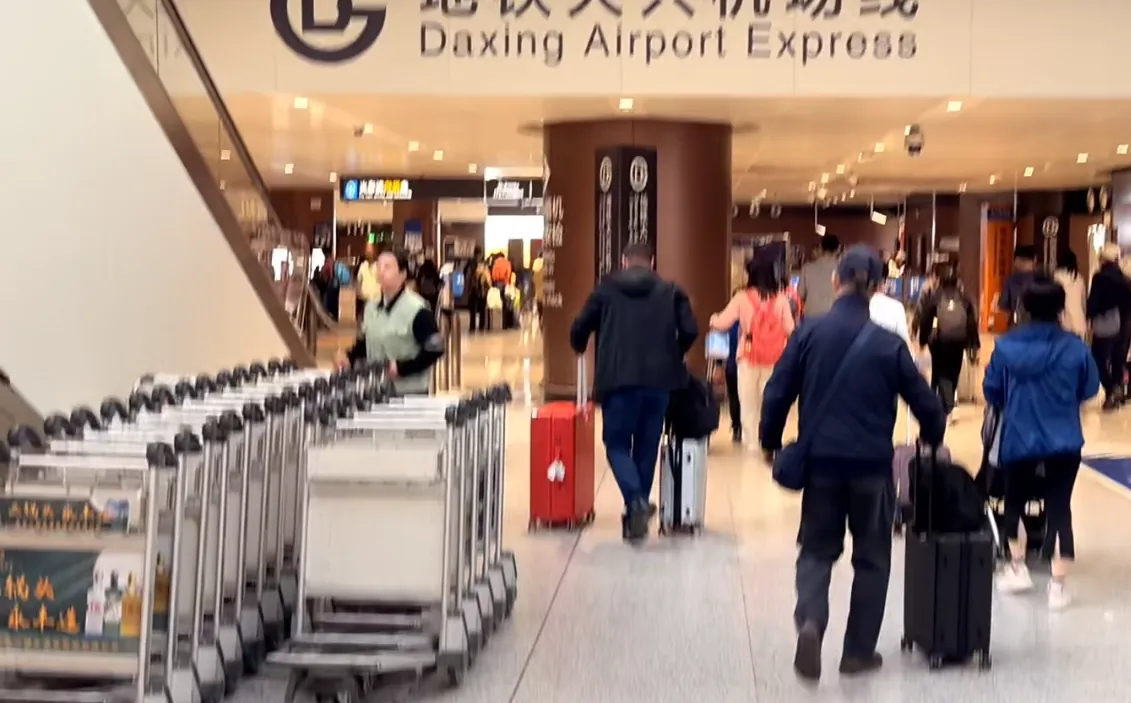
Daxing is the newer, farther airport, and its rail link does the heavy lifting. The Daxing Airport Express runs from the airport via Daxing Xincheng to Caoqiao on the southern Third Ring Road. The rail station is one floor below arrivals, on B1, and travellers recommend simply following the blue floor line marked for the subway toward Caoqiao. The planned northern extension to Lize Business District is still under construction in late 2026; Beijing's government site gives the end of June 2027 as the target for initial service, so for now Caoqiao is where the line ends.
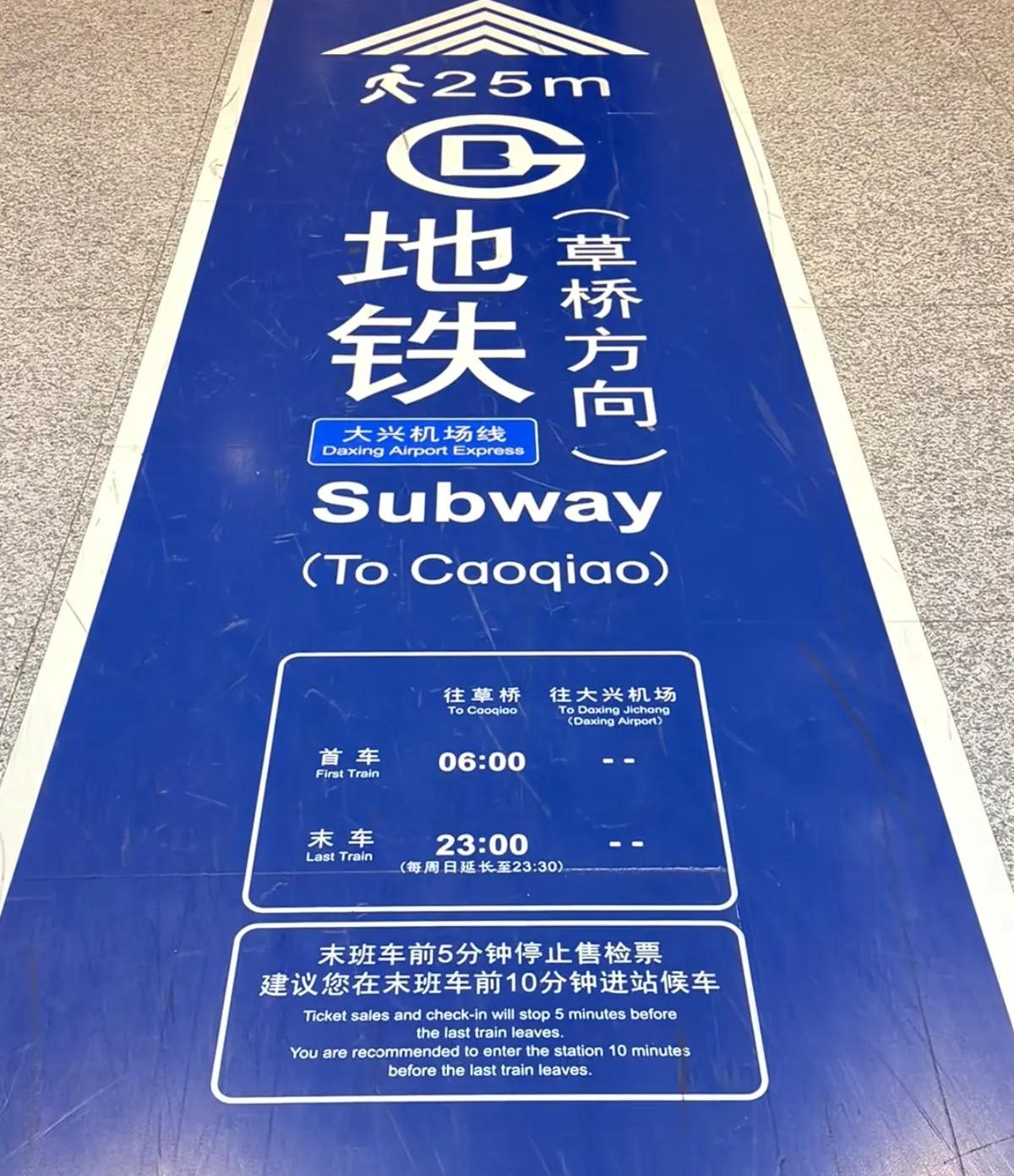
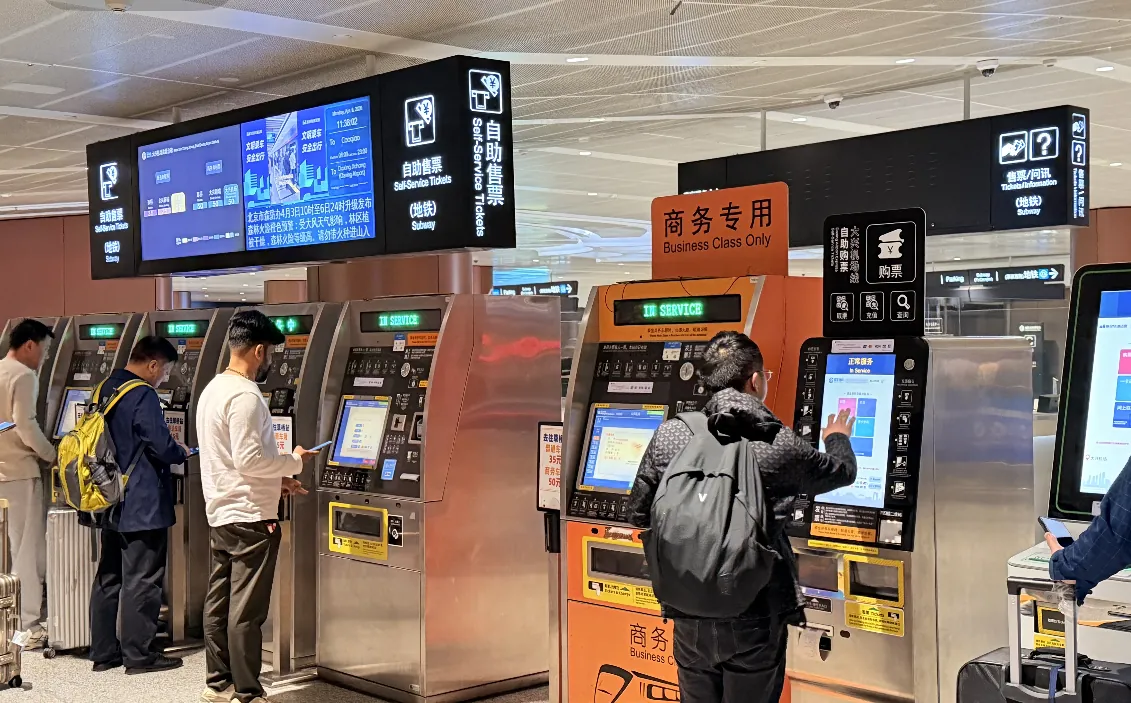
A standard seat for the full run between Daxing Airport and Caoqiao costs 35 yuan; business class is a flat 50 yuan. The operator puts the ride between Caoqiao and the airport at about 20 minutes. From the airport, trains to Caoqiao run from 6:00 until 23:00, and the last one moves to 23:30 on Sundays. Going the other way, the first train leaves Caoqiao at 5:30 and the last at 22:30.
Buy at the ticket machines or tap a card at the gate, then look at the platform screen before you queue. The line runs a mix of shorter and longer trains, and the floor has separate queue markings for each length. Stand in the wrong lane and the doors may stop somewhere else.
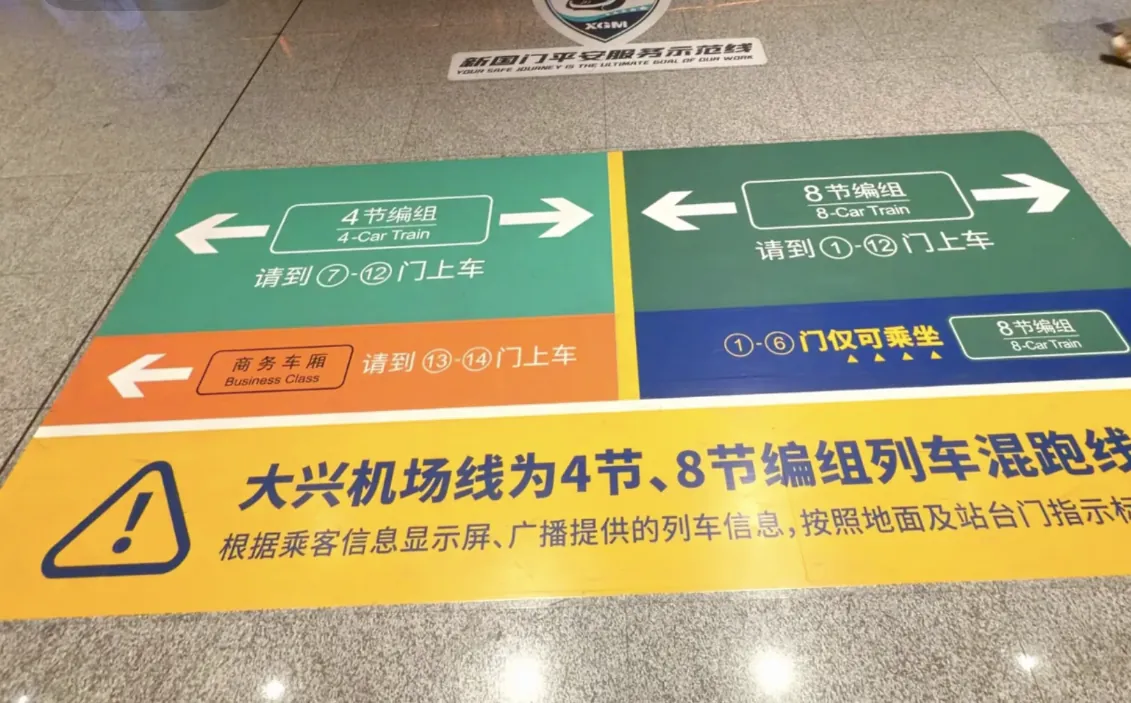
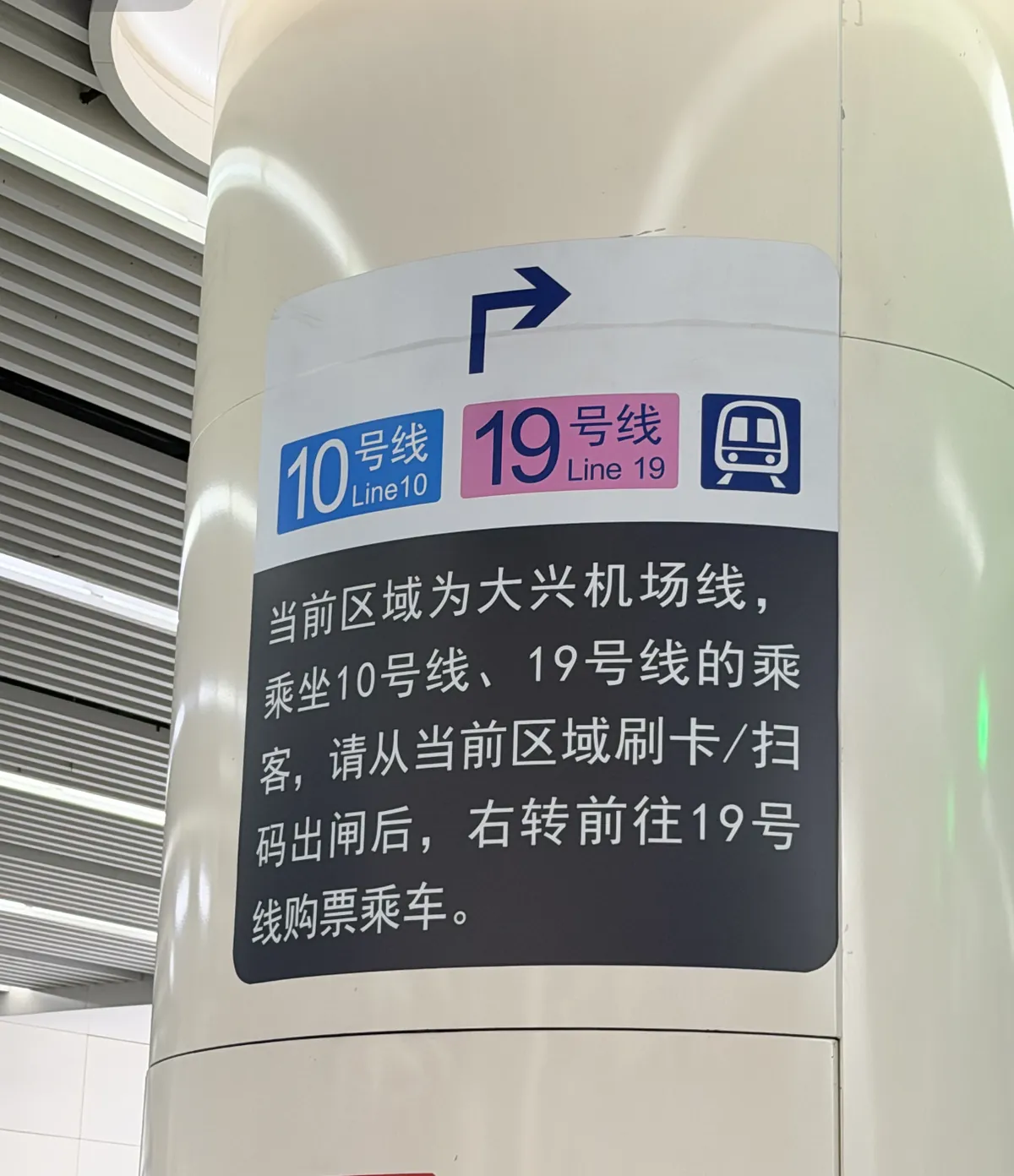
At Caoqiao, the express has its own fare gates. Both the station signs and traveller reports say you tap out of the express area and then enter again for Line 19 or Line 10. Line 19 sits on a parallel platform close by, which makes it the easy change for Taipingqiao, Financial Street and Jishuitan. Line 10 is a walk along a transfer corridor; it's fine with a backpack and less fun with two cases. The express also has a business-class carriage with its own gate, so check which gate your ticket uses.
If you are flying out of Daxing on China Southern, China Eastern, Air China or Xiamen Airlines before the end of 2026, the airlines are giving away or discounting Airport Express tickets for eligible fares. The Beijing government notice explains each airline's conditions; claim it in the airline's app before you head to the station.
Tickets for the airport buses and the Airport Express can be bought with a passport at the self-service machines by the "Beijing Service" counter at international arrivals. Staff there also help with SIM cards and mobile payment setup, which makes it a sensible first stop if anything on your phone isn't working.
Two other options are useful to know about. Airport buses leave from the arrivals level for hubs around the city and cover the late hours after the rail link shuts. And if you are actually heading to the southwest of the city, the Beijing–Xiong'an intercity line also leaves from B1 and runs to Beijing West; it is a national rail service, so it is booked through 12306 like any other train.
Beijing South Railway Station: Line 4, Line 14 or a taxi
Beijing South handles most high-speed trains from Shanghai, Tianjin and the south. When you come off the platform, everything useful is on the B1 level. The city administration's advice for busy periods is simply to take the metro, and that matches what most travellers report.
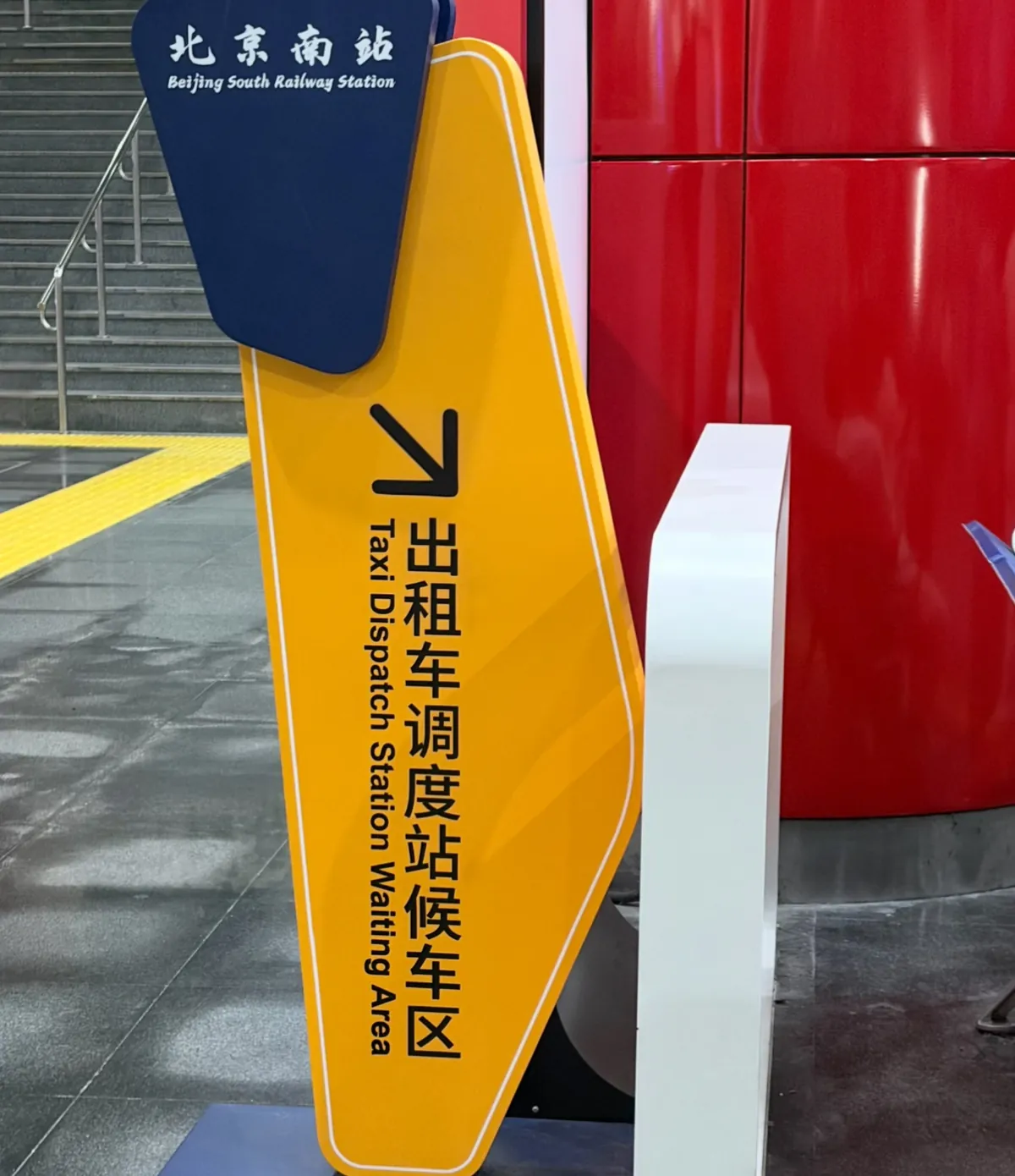
Line 4 runs north through Xidan and toward the Summer Palace side of town; Line 14 cuts east toward the CBD around Dawanglu. If you want a taxi, follow the taxi signs on the floor and overhead and keep going past the ride-hailing turn-off; it is easy to peel off too early. Taxi stations are at the east and west parking areas on B1, and ride-hailing pickups are on level M of the underground car park. At holiday peaks, the taxi line can be the slowest option by a distance. Late at night, night buses leave from the north and south bus hubs toward Beijing West, Hepingdongqiao and Beijing Railway Station.
Beijing West Railway Station: pick your exit first
Beijing West is older, larger and easier to get turned around in. Metro Lines 7 and 9 both stop at the station. Line 9 is the quicker way to the west side of the city and to change onto Line 1; Line 7 heads east toward Zhushikou, close to Qianmen, and on to Ciqikou.
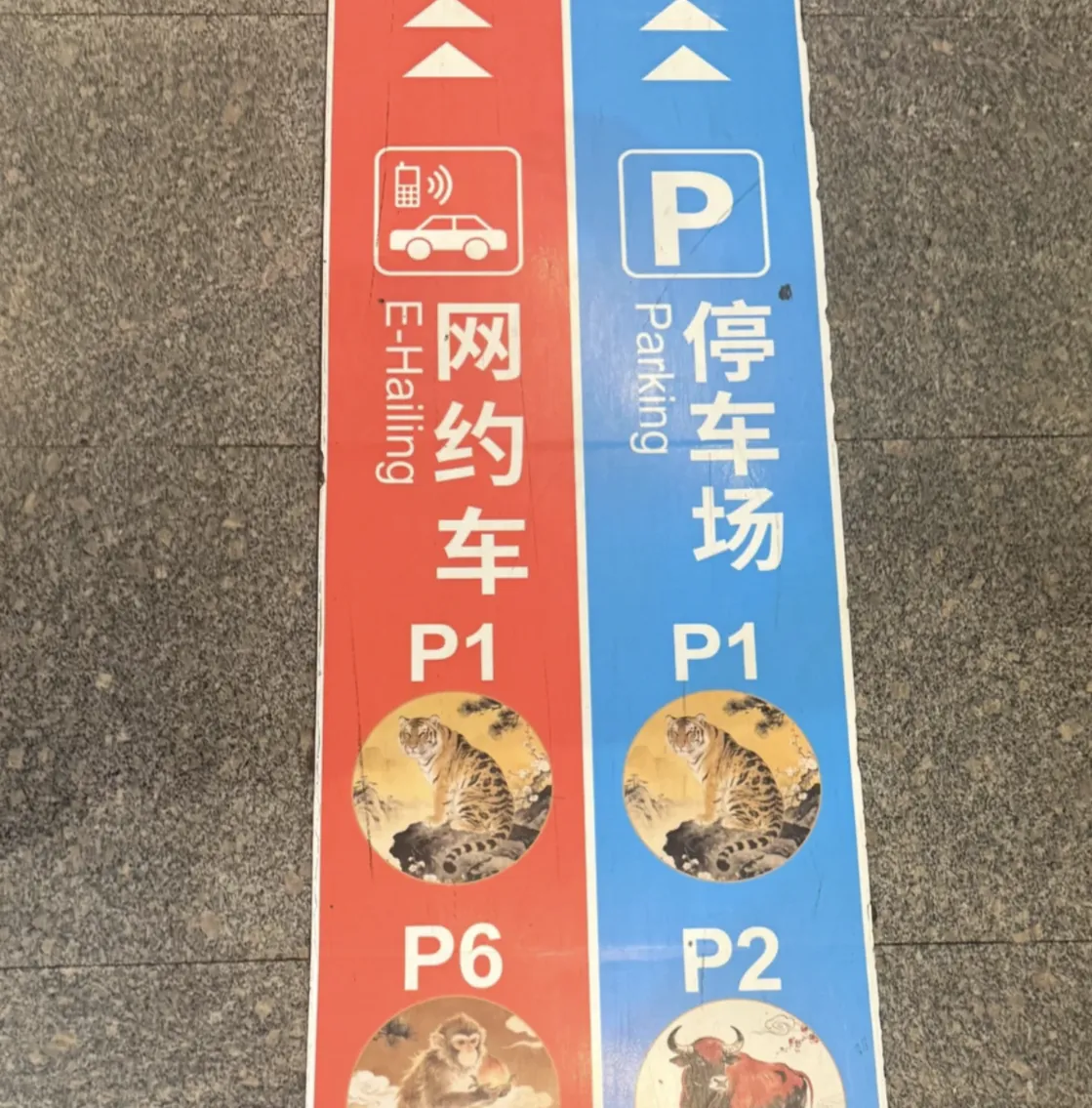
The station has a north and a south side, and taxis, buses and car pickups are split between them. Decide which side you need before you join the crowd moving toward the exit, and match it to the pickup point the ride-hailing app shows. If you would rather stay on the north side, travellers describe a red "E-Hailing" line on the floor that leads to the pickup lots; most are underground, and the one marked P6 is at ground level on the North Square.
On the south side, Rednote travellers who book a car to the South Square pickup say to follow the orange ride-hailing signs toward Guanglian Road and start the booking as you ride the escalator up, because drivers arrive quickly and the lane is crowded.
How do I pay for the metro and the car?
Beijing's published upgrade notice lists UnionPay, Mastercard, Visa, JCB and American Express among its supported contactless card networks. Tap the same card in and out, and watch for the card logo on the gate. Beijing's official guide describes a metro code reached through Alipay's Travel section. Either works on the ordinary lines; ticket machines and staffed counters are there as a fallback. On the regular metro lines, fares go by distance: 3 yuan for up to 6 km, 4 yuan up to 12 km, 5 yuan up to 22 km and 6 yuan up to 32 km, then 1 yuan more for each further 20 km. The two airport expresses are priced separately, as above.
For a car, the official city guidance is short. Use the DiDi app, or open WeChat → Me → Services → Ride Hailing. DiDi is also available inside Alipay. Pick the version connected to a payment method you have already set up. Official taxis at the airport and station ranks are the alternative if the app won't cooperate. Show the driver the hotel's Chinese address rather than reading it aloud. Beijing's meter starts at 13 yuan for the first 3 km and adds 2.3 yuan per km after that; the per-km rate goes up 50% beyond 15 km and 20% between 23:00 and 5:00, there is a 1 yuan fuel surcharge per trip, and tolls are on the passenger. From either airport that adds up quickly, so for one person travelling light the train is the cheaper habit; for three people sharing a car with luggage, the gap closes.
What should I sort out before landing?
Get mobile data working first; everything else depends on it. The China eSIM comparison covers which plans are worth buying ahead. Then save the hotel's Chinese name, address and phone number somewhere you can show offline, and look up the nearest metro station and exit. If you haven't booked a bed yet, the Beijing where-to-stay guide groups hotels by area, and an area on Line 2, 5 or 10 makes both airports easier.
For onward trains, the foreign passport train booking guide explains tickets, the station boarding guide covers getting through the gates, and the DiDi guide and metro payment guide go deeper on those two apps. The Beijing city guide collects the rest of the planning pieces.